Saturday, 23 April 2016

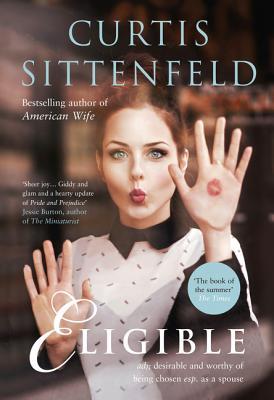
REVIEW: Eligible by Curtis Sittenfeld

EligibleFor all the apparent simplicity of her work, Jane Austen makes a very hard act for a writer to follow. Charlotte Bronte might have labelled Austen’s work as “a carefully fenced, highly cultivated garden, with neat borders and delicate flowers; but no glance of bright physiognomy” but, for something apparently so structured, capturing the essence of Austen’s light and playful writing is an extremely difficult task. So it was with some trepidation that I decided to read Curtis Sittenfeld’s ‘Eligible’, her take on arguably Austen’s best known novel ‘Prideand Prejudice’ – a book that happens to be one of my personal favourites. Sittenfeld is an admirable writer – I enjoyed her novel ‘Prep’ immensely and have heard only good things about ‘American Wife’ – but I’ve been burned by Austen rewrites before.

‘Eligible’ is the fourth book in The Austen Project, a HarperCollins published pairing of six bestselling modern writers with six of Austen’s classic works. So far, Joanna Trollope has tackled ‘Sense and Sensibility’ to modest reviews, Val McDermid’s ‘Northanger Abbey’ received a somewhat controversial reception and Alexander McCall Smith’s ‘Emma’ was warmly received but flew a little under the radar. I read Trollope’s ‘Sense and Sensibility’ and, for what it was worth, enjoyed it in spite of the fact that it changed very little of the original – which works absolutely fine in Austen’s nineteenth-century but arguably less so when transposed to the twenty-first. McDermid’s ‘Northanger Abbey’ was, alas, a DNF as soon as I realised I was supposed to buy the idea that a modern teenager with a smartphone would genuinely believe vampires existed. As for McCall Smith’s ‘Emma’? Whilst I like his writing well enough (especially his warm and gently Mma Ramotswe detective series), there is an element of McCall Smith’s writing that leaves everything feeling well…. a bit like another Alexander McCall Smith novel. So I gave his take on Austen a miss.

‘Eligible’ though is the first of the re-imaginings within the Austen project to break with tradition and ditch the original title. Which is great. It’s like Sittenfeld said, “Hey, you know what? This might be Pride and Prejudice but I’m going to do it my way.” Which is also why you’ll find that Meryton has become Cincinnati (which means that, yes, all of the characters are supposed to be American - Austen aficionados, if you need to go away and have a lie down then I’ll still be here when you get back), everyone has had about twenty years added to their ages (meaning Jane, Liz, Darcy and Bingley are all approaching forty) and, as with most adult relationships in the twenty-first century, pre-marital sex is a thing.

And you know what? ‘Eligible’ one of the most refreshing rewritings of Austen I’ve read and one of the few that has captured Austen’s wry sense of humour and her acerbic social wit. I’m keeping this review spoiler-free so I won’t go into particulars with the plot but Sittenfeld has managed to keep the classic events of the original (including a very clever take on Lizzy Bennet’s walk through muddy fields) whilst updating them in a plausible way. Her characters feel very much like twenty-first century women but, at the same time, they still feel like Austen’s characters too. And her social satire is laugh out loud funny – from exercise crazes to the pressure placed on women to have children, via doctor-clichés (Sittenfeld’s Darcy is a neurosurgeon) and fad diets – ‘Eligible’ is as observant and biting as Austen’s original.

Of course, there are a few minor niggles. Whilst it makes for a nice framing device, and a nice opportunity for satire, I enjoyed the sections relating to the TV show ‘Eligible’ (think ‘The Batchelor’ but…worse somehow) the least – but that’s probably because I’m really not a fan of reality TV. I did also find Sittenfeld’s Liz less likeable than Austen’s Lizzy. Austen somehow manages to keep her Lizzy on the witty side of bitchy whereas Sittenfeld’s…well, let’s just say she occasionally dips a toe over the line for a chapter or two! That said though, Sittenfeld’s Liz does have considerably more to put up with – the Bennet family, for all that they have been gloriously reimagined, are a nightmarish collection of the vain and the selfish in ‘Eligible’, with character traits that seemed merely amusing or embarrassing in Austen’s original now shown as being truly dangerous or spiteful in the ‘real life’ of Sittenfeld’s twenty-first century Cincinnati. Again, it’s hard to give examples without spoilers but I’ll just say that never before had I considered what terrible examples of parents Mr & Mrs Bennet truly were.

Overall, I enjoyed ‘Eligible’ immensely. It made me laugh, I sped through it and it updated Austen’s work without insulting the original but also without straining to laboriously re-create every detail. Like ‘Bridget Jones’ Diary’, ‘Eligible’ has taken the essence of Austen and worked it in a new way. Now, that might not be for everyone and I daresay some Austen fans won’t welcome many of Sittenfeld’s changes to their beloved Elizabeth and Darcy. But, for me, ‘Eligible’ worked in the same way that P D James’ ‘Death Comes to Pemberley’ or the TV series ‘Lost in Austen’ worked – it’s not trying to BE Austen, it’s just borrowing from her for a while and doing its own thing. Plus, it made me want to go back to the original ‘Pride and Prejudice’ and read that for the millionth time. Which can only ever be a good thing.


My thanks go to HarperCollins UK and to NetGalley for providing an advanced copy of the book in return for an honest and unbiased review. ‘Eligible’ is published by HarperCollins(The Borough Press) and is available in hardback now from all good book retailers. 

Sunday, 17 April 2016

REVIEW: The Midnight Watch by David Dyer

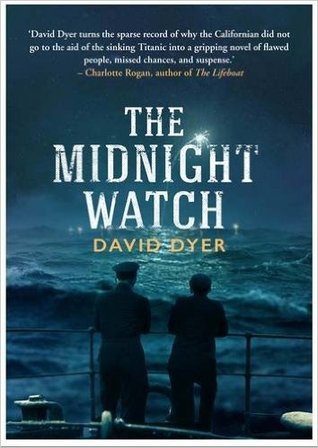
The Midnight Watch: A Novel of the Titanic and the CalifornianSo much has been written about the Titanic that it must be difficult for a writer interested in the subject to find a new angle. There are history books a plenty, diaries and letter, transcripts of interviews, novels, poems and plays, in addition to the myriad of TV series and blockbuster films. So it was a pleasant surprise to find that David Dyer has found something new to say about the Titanic disaster in this, his debut novel, ‘The Midnight Watch’.

Instead of focusing on Titanic herself, Dyer turns his focus to the men on board the Californian, the ship that was closest to the Titanic on the night of the disaster and saw her distress rockets but failed to go to her aid. Specifically, he looks at how a series of decisions taken during one cold April night impact the lives of three men: Stanley Lord, Captain of the Californian; Herbert Stone, her second officer and John Steadman, a Boston newspaper reporter who soon senses blood when the Californian docks.

By humanising the story and narrowing the focus to these three men, Dyer cleverly avoids a pitfall of other Titanic novels I have read – that of having too large a canvas. The Titanic disaster remains memorable for so many reasons: the luxurious nature of the ship, the famous people on board who perished, the safety warnings ignored in the pursuit of speed and luxury, the catastrophic loss of life amongst the passengers in third class, the fact that it marked the beginning of the end of an era. All of which is fascinating but is a quagmire for a novelist trying to capture it all. Whilst Dyer touches on many of these key aspects, he keeps his focus firmly on the Californian, bringing in other aspects of the Titanic mythos only as support for the story of Lord, Stone and Steadman. It is skilfully crafted and results in a novel that is tightly plotted and fast paced without losing any sense of the wider picture.

Lord, Stone and Steadman are all rounded, fully-realised characters. The viewpoint switches between Steadman’s first person narrative and a third person narrative, focusing on Stone. Steadman is an excellent character to be inside the head of - passionate, dogged and flawed and his hunt for the truth behind the Californian is the driving force of the novel. In contrast, Stone’s sections are more reflective, showing a man in danger of losing his sense of self and at odds with his place in the world. They are slower than Steadman’s first person narrative but provide an important contrast and help to tease out the finer details of the story. Lord, the most elusive of the three as he never narrates the novel, could be seen as the villain of the piece – the Captain who failed in his duty to aid a fellow vessel in distress – but Dyer treats him with both respect and sympathy. The men of the Californian were not bad men, he is saying, but unfortunate. They misinterpreted the signals given to them and, through a series of human errors and fatal flaws, failed to go to Titanic’s aid.

Without giving away any spoilers, the latter part of the novel is a story within a story and finally takes the reader onto the deck of the sinking liner herself. I rarely cry when reading fiction but this final part bought a tear to my eye. Dyer has such an ability to capture small details - the nervous tapping of fingers against teeth, the flicker of a frown across a face, the delight a small child would have in seeing an orange – and he brings this to the fore when describing Titanic’s sinking. The effect is very moving.

All in all, I was surprised in the extreme by this novel. It is an assured and, as far as I can tell, well-researched book and genuinely adds a new perspective on a tale that has already been very well told. For anyone interested in reading another perspective on the Titanic disaster, this is a suspenseful novel of human flaws and missed chances that I would highly recommend.

My thanks go to Atlantic Books and the Real Readers scheme for providing an advanced copy of the book in return for an honest and unbiased review. ‘The Midnight Watch’ is published by Atlantic Books and is available in hardback now from all good book retailers. 

Monday, 11 April 2016

March Wrap Up 2016

Another month, another wrap up! March madness at the day job, combined with a mid-month reading slump, did lead to March being a slightly less productive reading month than January and February in terms of physical reading. Truth be told, I was just too tired when I walked in the door at the end of the day to do much more than veg out with some YouTube videos or catch up on some TV, so reading was largely consigned to weekends and days off. I was saved by audiobooks and got a couple of really great listens in this month however, starting with…

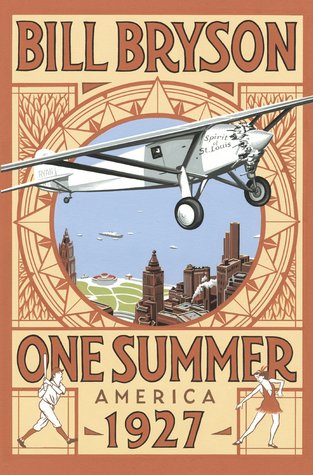
One Summer: America, 1927One Summer: America,1927 by Bill Bryson (narrated by Bill Bryson)

I’ve been listening to this one on audio for a couple of months – it comes in at just over 17 hours – on my way to and from work and it’s a great book to dip into and out of whilst on the go, as well as being suitable for listening to in larger chunks. The book is an examination of the events of one summer that, Bryson argues, changed the face of America and forged the world power that we know today.

Whilst large in scope, Bryson does an excellent job of narrowing his topic into manageable chunks so that, before you know it, you’ve covered Charles Lindbergh and the birth of the aviation industry, Babe Ruth’s home run record, the seeds of the Great Depression and the growing concerns about the connection between fascism and eugenics and all without breaking a sweat! He does an excellent job of joining the dots between seemingly unconnected events to create a picture of the atmosphere and energy within America at the time in order to give a real sense of this period of great change and progress in the country.

If I had one criticism it is that, on occasion, Bryson can leave the reader (or listener, in this instance) hanging for a few chapters before picking up a particular thread of the ‘story’ again. Whilst this would probably be fine in a print book – you could just flick back a few pages and re-cap – it did leave me foundering on a couple of occasions as I struggled to remember exactly what had been said about the Sacco and Vanzetti case and why it was important. That said, it’s pretty easy to pick up the thread again after a couple of minutes so this is a relatively minor point all things considered.

This is the second audiobook I’ve listened to by Bryson (the first being his ‘Home: A Short History of Private Life’, which I can also highly recommend) and I have to say I would definitely listen to more. Bryson is such an engaging narrator of his own work that even the driest subject matter comes fully alive with his warm and avuncular tones really bringing out the humour, with and cynicism within the writing. And, whilst by no means an exhaustive book, – Bryson is aiming to give an overview for the lay reader rather than a detailed analysis for a history buff - I did feel that the topics covered were done so thoroughly and came away with a greater knowledge of American history at this period and how this impacted on later world events.

Snow Falling on CedarsSnow Falling on Cedars by David Guterson

Ah, the book that did a reading slump create. Which is not to say this is a bad book because it most definitely is not. A reflective account of the fate of American-Japanese citizens on a small island off the coast of Seattle after the events of Pearl Harbour, this PEN/Faulkner award winning novel is beautifully written and has clearly been crafted with a great deal of dedication and research. Unfortunately, that didn’t stop me from finding it terminally slow and, I’m afraid to say, somewhat dull.

The most frustrating thing for me throughout was that this book really shouldn’t be dull. It features an unexplained death, a murder trial, a bittersweet teenage love story, a little-known historical event of some importance, a healthy dose of small town intrigue and an examination of the psychological effects of combat packed into its pages. But the pace, oh the pace!

Starting in the courtroom, in which Japanese-American fisherman Kabuo Miyamoto is on trial for the murder of a fellow islander, the book slowly (and I mean, s-l-o-w-l-y) moves between the pre-war era, when tensions between Japanese settlers and islanders simmer below the surface, through the events and repercussions of Pearl Harbour and back to the present day when local reporter Ishmael Chambers is struggling with his unrequited love for Kabuo’s wife, Hatsue, with occasional detours via extended flashback to Ishmel’s time fighting in the Pacific and Hatsue’s life during internment.

The style and tone of the writing throughout is contemplative, with the author keen to ensure that the reader understands just how sweet the strawberries grown on Kabuo’s farm taste and exactly what the cedar tree that the young Ishmael and Hatsue conduct their trysts in smells like. Which, if that kind of writing floats your boat, probably makes this a beautifully written, reflective literary novel about love, death and the echoes of the past. Unfortunately, for me, the pace was just that little bit too slow and the writing just that little bit too meditative. As a result, despite the clear skill involved in the writing, I did find this book all too easy to put down and rather difficult to pick back up.

The blurb on the back, which focuses very much on the court case aspect of the plot (actually more of a framing device for the narrative than a plot strand in itself), did little to help as it meant I went into the novel expecting something very different from the book I read. I’m sure a lot of literary fiction lovers would really enjoy ‘Snow Falling on Cedars’ but I’m afraid that, for me, it was only the fact that this was a book club read that prevented this being a DNF.


This was one of those books picked up completely on a whim in my local library. A bold, attractive cover design drew me in despite the fact that I had no idea who Jeremy Hutchinson was or why I would want to read his Case Histories. Turns out that more people should know who Mr Hutchinson is and that his Case Histories form a major part of recent English legal history and have helped to shape the moral compass of modern society.

During his career at the criminal bar, first as a newly qualified defence barrister and later as a leading QC, Jeremy Hutchinson was involved in some of the biggest trials of the 1950s, 60s and 70s, including the defence of Christine Keeler (of the Profumo Affair) and of the publishers of ‘Lady Chatterley’s Lover’. The cases covered in this book are varied, ranging from Cold War spying scandals to discussions about what is art and what is indecency. All of them provide examples of how the social and moral attitudes of the nation shifted dramatically from the 1960s onwards and Grant provides a lively discussion throughout of the ways in which societal changes impacted the verdict of the courts (albeit that leading judges appear to have been a little slow to catch on to the post-War zeitgeist) and vice-versa. Each account is animated and entertaining, as the very best of narrative non-fiction should be, and this makes a dry subject matter both lively and interesting to the lay reader. 

My only criticism would be that Grant does, at times, lean a little too much towards hero-worship of his subject – a fact that he openly acknowledges in his introduction to the paperback edition – but this is a minor one for there is clearly much in Jeremy Hutchinson’s career and character to admire. And besides, Grant does not claim to be writing an independent biography but a social history and, in that, he has done a very good job.


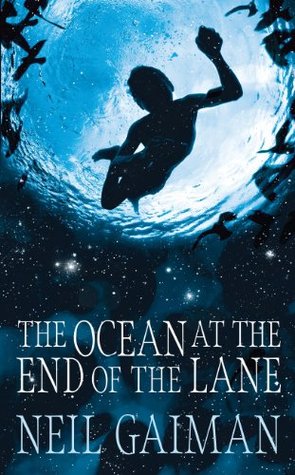
The audiobook that did a reading slump end! A good friend of mine recently read this book and, during an afternoon of enjoyable walking, recommended it very highly to me. I’ve read Gaiman before – ‘Stardust’ is an old favourite (the film is excellent too), I reviewed his graphic novel ‘The Sleeper and the Spindle’ last year and I adore ‘Good Omens’, his collaboration with the late, great Terry Pratchett – but, for some reason, I’ve never got around to his other works, despite owning a couple of them. When I discovered that Gaiman himself read the audiobook version of ‘The Ocean at the End of the Lane’, I decided to experience it as an audio rather than acquire the paperback and I’m so glad that I did. I am sure that the book would be fantastic in whatever format you ‘read’ it but Gaiman is a wonderful narrator, bringing out all the surreal darkness of this fantastical tale.

The book is a modern fairy story in the very best sense and, like all true fairy stories, that means it gets (as Gaiman says in his introduction) very dark indeed. The unnamed narrator is looking back on his life following the death of his father, returning to a long ago summer when the family lodger stole their car and committed suicide in it, thereby stirring up ancient powers that were better left undisturbed. With the help of his enigmatic neighbour Lettie Hempstock and her family, our narrator is pulled into a world of dark creatures and old magic, a world where it will take all his courage to stay alive and to protect his family from the dark forces within that are now trying to destroy it.

The contrast between wistful portrayals of an idyllic country childhood and the growing sense of a dark, unstoppable menace really drives this book, taking the reader into the very heart of every childhood nightmare with no assurances that it will deliver you safely to the other side. Only the reassuring presence of Lettie Hempstock, truly one of the best female characters to have been created in modern literature, allowed me to hope for a ‘happy’ ending to Gaiman’s deliciously twisted tale.

Fans of Gaiman will, of course, adore this book, which plays with ideas of memory and fable, magic and reality and with the power of the stories we carry inside ourselves. For those not yet familiar with Gaiman, the audiobook is probably a better introduction that I imagine the reading experience would be – Gaiman’s narration hooks you from the very first sentence – but you might be surprised how dark the story gets. I’d say ‘Stardust’ would be a better jumping off point for new readers because ‘Ocean’, for all its dark deliciousness, is a little like jumping in at the deep end!

The Human Flies (Kolbjorn Kristiansen, #1)The Human Flies by Hans Olav Lahlum

More book club reading! In contrast to ‘Snow Falling on Cedars’ however, this was a joy to read – an homage to golden age crime fiction of the very best kind. Those who have followed this blog for a while will know that I’m a sucker for a bit of crime fiction but that I do prefer my crime to be on the cosier or classic end of the crime spectrum. I can enjoy a brutal bit of Scandi noir as much as the next person but too much by way of guts, gore and alcoholic detectives with broken family lives doesn’t really do it for me.

‘The Human Flies’ is the first of a series of Norwegian crime novels featuring the Detective Inspector Kolbein Kristiansen (known as ‘K2’) and his precocious Holmes-like teenage compatriot Patricia and takes as its jumping off point that classic staple of the golden-age, the locked room mystery. Set in Oslo during 1968, Resistance hero and former politician Harald Olesen has been found shot in his apartment, the door locked and with no one having gone in or out of the building. Cue a classic investigation of the buildings other tenants, involving red herrings, shadowy goings on and even some international intrigue!

Bestsellers in their native Norway, Lahlum’s ‘K2’ novels (the second of which, ‘Satellite People’ has also been translated into English and has made its way onto my TBR), knowingly pay tribute to the era of Christie and Sayers, as well as to the granddaddy of classic crime, Mr Sherlock Holmes, without ever devolving into pastiche. For fans of classic crime fiction, ‘The Human Flies’ will be delight to read – I got through it in two sittings – and you’ll look forward to adding more K2 mysteries to your reading pile!

So that was March, more of a struggle to read that to wrap up! On reflection, I did enjoy some very good books but I think the reading slump made the month feel like a long one at the time. April has already started well – I’ve been fortunate enough to have been sent a couple of excellent books for review and have some exciting reads on my TBR also. As always, please feel free to leave a comment to let me know what you are reading, or to join in the conversation over on Twitter @amyinstaffs.


Happy Reading x
Monday, 28 March 2016

Storytelling's New Frontier?

Today I want to talk a little bit about storytelling and narrative in non-traditional mediums. Specifically, in computer and video games. 

I’ve been an avid gamer since being introduced to a PlayStation back in the late 90s and am currently part of a 6 console household, with myself and my hubby owning a PS2, Nintendo Wii, Xbox 360, PlayStation 4, a Nintendo DS and a Nintendo 3DS between us. That’s three generations of consoles represented (four if you count the backwards compatibility of the PS2 that allows it to play original PlayStation games) and it’s really interesting to note the different attitudes towards storytelling and narrative drive between the older games and those now appearing on the newer console iterations.

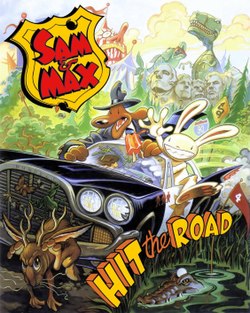
Sam & Max Hit the Road artwork.jpgBack in the day, when I first became aware of computers and computer games, the medium was still relatively basic. Console classics such as Sonic The Hedgehog and Super Mario Bros were massively popular but most console titles didn’t really go in for narrative. I mean, does anyone really understand why Bowser keeps kidnapping Princess Peach? And, more importantly, does anyone really care? I think it’s fair to say most people didn’t play Mario for the story. If you wanted a game with a little more narrative depth, you had to look to your computer; long the home of text-based narrative titles and point-and-click adventures such as Broken Sword, Sam and Max Hit the Road (pictured right, with artwork by Steve Purcell) and The Day of the Tentacle.

As consoles developed and became capable of more complex games, it’s surprising of how the focus remained largely on gameplay as opposed to story. I was, and remain, a huge fan of TombRaider II but I can’t say that I was driven to play it by the plot which, if I remember correctly, revolves around a magical dagger that can turn people into dragons (yes, really). And I love the Resident Evil franchise but I’d be the first to admit that story isn’t one of its strong points and efforts to introduce a complex narrative in more recent titles has led the series so far down the rabbit hole that it’s struggling to retain its fan base. You play Resident Evil to shoot zombies in the head is all I’m saying.

Image result for final fantasy vii charactersAdmittedly, there were exceptions to the rule. J-RPGs such as the Final Fantasy series (pictured left) have been telling amazing, complicated and often downright weird stories for many years. And The Legend of Zelda and Metal Gear series' have both put serious investment into their story arcs over the years. But I can definitely see why critics and storytellers stuck their noses up at computer games and saw them as a less complicated narrative form.

Image result for everybody's gone to the raptureAll of that has changed in recent years, particularly in the most recent console generation. The game that prompted this post is a curious recent release by developers The Chinese Room called Everybody’s Gone to the Rapture (pictured right), part of a new breed of games known as ‘walking simulators’ (although I prefer ‘interactive narrative, which seems less dismissive) in which the player is placed in an extremely pretty environment and left to explore, with story emerging as you do so. 

The Midwich CuckoosEverybody’s Gone to the Rapture takes place in the 1970s in a sleepy English country village where everybody seems to have disappeared, leaving in their wake a mysterious trail of light that encourages you to follow it. The game is unashamedly influenced by classic British sci-fi and playing it led me to the work of John Wyndham, specifically to ‘The Midwich Cuckoos’, his classic tale of aliens in our midst set in, you guessed it, a sleepy English village. In all my long history of playing games and reading books this is the first time that a game has ever led me to a book and, importantly, that the narrative of that game has lived up to the narrative of a book which is very similar in both tone and theme. ‘The Midwich Cuckoos’ is an excellent book and Everybody’s Gone to the Rapture is an excellent game. Both of them tell their stories in quietly sinister, creeping way and you get a sense of mounting horror as you progress through both. In short, both are excellent stories.

Image result for bioshock infiniteIt is possible to argue that walking simulators are not really games. Many gamers see them more as interactive stories and it is true that there is little agency or player directive in Everybody’s Gone to the Rapture. But, in recent years, there have been a wealth of games that offer similar narrative depth with more traditional gameplay mechanics. The Bioshock series (pictured right) is almost as famous for its deeply involved, extremely complicated lore (which has definite Lovecraftian overtures) as it is for its immense enemies and cool plasmids. The recently re-booted Tomb Raider franchise has a story written by Rhianna Pratchett, which sees Lara Croft develop relationships with other characters and places real emotional force behind your dealings with both them and with her. Even previously gung-ho titles such as first-person shooter series Call of Duty have realised that it pays to have some decent story elements in your single player campaign if you want to encourage people to actually play it.

Games media and pre-release information increasingly focuses on the story as much as it does on the graphics and the gameplay. Developers have realised that a good story helps fans to invest emotionally in the world and that, in turn, encourages them to spend more time in it and to play more games and, hopefully, to buy the next one. Divergent story arcs, dialogue choices and multiple endings, once the preserve only of specialist RPGs, have become the norm across so many games that, to be lauded for your storytelling, developers now have to really push the boat out. I’m not going to say that storytelling in games is as developed as that in a novel or book series just yet because it’s definitely not. But games certainly aren’t cases of style over narrative substance any more. There are some fantastic stories out there just waiting to be discovered and, hopefully, many more still to come.


Do you agree that games have become more narrative driven? Do you see interactive narratives as possible competitors to traditional mediums? Or is a book a book and a game a game and never the twain shall meet? I’d be interested to know your thoughts so drop me a comment down below, tweet me @amyinstaffs or find me on Goodreads!