Sunday, 23 October 2016

Deweys 24 Hour Readathon


readathon1_lg
It's a wrap! My first proper attempt at a readathon is done and I have to say it's been a blast. Dewey's 24 Hour Readathon is, as the name suggests, a readathon that takes place over 24 hours. It has a set start time world-wide meaning that everyone participating is, in theory, reading together and can cheer each other along when the going gets tough. Some participants do try and read for the whole 24 hours but I become a very bad person with lack of sleep so I opted for a slightly less hardcore approach and chose instead to dedicate my waking hours to reading during the 24 hour period. So, how did I get on?


Well, I am proud of how much I managed to read. During the readathon period, I read a total of three books and started on a fourth, a total of 704 pages. I also listened to 60 minutes of my current audiobook during a short gym break. The books I read and finished during the readathon were:


  • 'Hag-Seed' by Margaret Atwood
  • 'Bodies of Water' by V.H. Leslie
  • 'Today Will Be Different' by Maria Semple


I also started Wilkie Collins' 'The Haunted Hotel' and progressed the audio of my current book club pick 'The White Tiger' by Aravind Adiga (read by Bindya Solanki).

Hag-Seed (Hogarth Shakespeare)My favourite read of the readathon was definitely Margaret Atwood's 'Hag-Seed'. This is the latest in the Hogarth Shakespeare re-tellings of Shakespeare's plays in novel form (although the only one to date that I have read) and I have to say that I think Atwood has pulled it off brilliantly.

Atwood's Prospero is Felix, a prominent theatre director who has been unceremoniously ousted by his right-hand man, Tony. Twelve years later, Felix has landed a job as the director of a prison theatre program when fate intervenes to place Tony directly in his path. As the possibility of revenge presents itself, Felix dreams us a theatrical, illusion-ridden version of 'The Tempest' that will change his life, and that of his cast, forever.

Capturing the revelry and mystery of Shakespeare's original (along with a great deal of Shakespeare's swearing!), Atwood adds plenty of her own magic to this re-telling, ending up with a novel that has warmth, humour and darkness in equal measure. I love Atwood's writing and her sly observances of human nature and there's plenty of wit and spark in this - it really was a joy to read and a great choice to kick the readathon off.

Bodies of Water'Bodies of Water' was my next choice, begun as daylight was fading and the evening drawing in. A slim volume, coming in at 130 pages, it's a ghost story with a neat psychological twist that slips between the modern day and 1871.

After ministering to fallen women in Victorian London, Evelyn has suffered a nervous breakdown and has been sent to the imposing Wakewater House, a hydrotherapy establishment on the banks of the Thames, to undergo the fashionable Water Cure. Years later, Kirsten moves into Wakewater - now transformed into modern apartments - fresh from a break-up and eager for the restorative calm of the river. But who is the solitary woman with the long black hair that Kristen keeps seeing by the riverbank? What is her connection to Wakewater? And what does she want from Kirsten?

At its heart a ghost story in the classic mould, filled with a creeping sense of unease and trepidation, this slim volume also examines issues surrounding women's rights, including female sexuality and mental illness. Whilst to slender a volume to fully examine the fascinating topic of the Victorian treatment of women's illness, it's surprising how much 'Bodies of Water' manages to touch upon. It's almost a shame that Leslie didn't make this longer and turn it into a full novel as my only criticism would be that some of the characters felt a little slight and the ending, whilst sufficiently sinister, did feel rather rushed. That said, this is a novella chock full of atmosphere and made a great mid-readathon book to finish off before heading to bed.

Today Will Be DifferentFinally, I read Maria Semple's latest novel 'Today Will Be Different', a contemporary novel with comic elements about a woman on the edge of a nervous breakdown who, over the course of one day, revaluates her life and her place within it.

Eleanor Flood is a talented, middle-aged illustrator who has lost her mojo following a move from New York to suburban Seattle. Nobody remembers her cult TV animation, her graphic memoir is 8 years overdue, her precocious son Timby is faking illnesses at school and, to top it all off, her marriage to husband Joe has hit the rocks. Taking place over the course of one day, Eleanor resolves that today will be different - she will get up, get dressed and get her life back on track. But, as is the way with life, that doesn't exactly go to plan.

I really enjoyed Semple's 'Where'd You Go Bernadette' with which this novel shares many similarities. But what made quirky heroine Bernadette - another woman on the brink of a mid-life crisis with more baggage than an airport and enough neuroses to keep an entire hospital full of shrinks busy - so engaging was that, underneath all that, she was a likeable person. Crazy, neurotic and a little bit selfish but still with a great deal of warmth, humour and heart. Sadly, Eleanor Flood has none of that. She's crazy but not in a kooky way, self-absorbed as opposed to neurotic and sarcastic to the point of acidic, instead of waspishly witty. All in all, she's not that nice a person to spend an entire book with.

In addition, I failed to see the point of the plot. Throughout the course of Eleanor's day, a series of anarchic incidents and mad-cap escapades sets her off course, including a lunch-date with a bitter former colleague, an unexpected run-in with a frustrated poet and a head-injury caused by a contemporary art installation. All of which are kind of funny in themselves but, collectively, just felt a little insane. And none of which really added anything to Eleanor's character or to her sense of herself, which is bought out more in remembrances and flashbacks to her childhood with her drunken father, the death of her actress mother and the causes behind her strained relationship with her sister Ivy.

I really wanted to like this book because Semple has such a gift for turning a phrase and a really excellent sense of the absurd. She's brilliant at black humour and capable of writing real wit and warmth into her characters. Sadly though, I just didn't get that feeling with 'Today Will Be Different', which lacked the warm and gentle humour of 'Where'd You Go Bernadette' and, sadly, felt like a bit of a mess. I finished it more out of sheer stubbornness that anything else.

The Haunted HotelOh well, onwards and upwards as they say. With an hour of two left of the readathon, I started on Wilkie Collins' 'The Haunted Hotel', another ghost story in the classic mould. I only managed 50 pages by the time the readathon came to a close but I'm really enjoying it so far as it's nicely combining good-old fashioned Victorian gothic with a pleasant mystery and an easy writing style.

I also mentioned my current audiobook, Aravind Adiga's 'The White Tiger', which is my book group pick for November. Set in Bangladesh, the book seems to be the life story of Balram Halwai - also known as 'The White Tiger' - told via emails that the adult Balram is sending to the Chinese Prime Minister. It's engaging so far, although I'm still in the early parts of the book, and the audio narration by Bindya Solanki is wonderful. I think audiobooks are a great choice for book group picks as they allow me to free up physical reading time for books on my personal TBR but still read my book club pick in time for group when I'm driving to/from work or doing chores.

All in all, a really excellent weekend of reading! I really enjoyed being part of an international community of readers, all cheering each other on. I also picked up some great book recommendations over the course of the weekend, took part in a couple of the mini-challenges being hosted and had some Twitter and Litsy chats with fellow readathoners. Plus it really revitalised my reading and put a nice dent into my TBR pile, as well as adding to my Goodreads Reading Challenge target (where I've been flagging behind a little).

I'd definitely readathon again in future and would like to thank all the hosts, cheerleaders and readers for making this such a fun event to be a part of. I'd love to know if any of you have ever taken part in a readathon and what you thought of it, or if you'd like to take part having read about my experience over the weekend. As always, drop me a comment down below, tweet me @amyinstaffs, or find me over on Litsy @ShelfofUnreadBooks, on Instagram @amyinstaffs and over on Goodreads.

Happy Reading! x

Sunday, 16 October 2016

REVIEW: The Underground Railroad by Colson Whitehead

The Underground Railroad
Opening a book that has arrived with serious fanfare is always, for me at least, a combination of excitement and trepidation. Excitement, because I do love reading exciting new fiction. And trepidation as I worry that the book itself may not live up to the hype, especially when that hype train has been set in motion by the mother of all book promos, The Oprah Book Club. Fortunately, I need not have worried because 'The Underground Railroad' is an amazing novel. Difficult, brutal, complex and meditative but amazing through and through.

The novel follows Cora, a slave on a Georgia cotton plantation who is an outcast even amongst her fellow slaves. Reduced to sharing space in Hob with fellow outcast women, Cora is struggling with her emerging womanhood and the implications of her own mother's abandonment when she is approached by Caesar, a recent arrival from Virginia, who tells her about the Underground Railroad and his daring plan for escape. As she follows Caesar into the unknown, Cora knows she is escaping from a life of punishing labour but she cannot prepare for the hardships that await her as she makes her towards her new life.

It's very hard to summarise this book in a few paragraphs because Cora's journey encompasses so much. From the brutal hardships of plantation life to the temporary respite of a southern farmstead, her journey encompasses many versions of the American south and provides a real picture of the complexity of opinion regarding people of colour in the pre-civil war era. When civil rights are taught at school (especially in British schools), the American Civil War is  often made out to be a cut off point - the moment at which civil rights and the struggle for freedom took flight. 'The Underground Railroad' presents a much more varied portrait of the nation, moving through the terrifying brutality of the slave-owning states to the insidious schemes hiding behind some so-called 'progressive' movements and the genuine wish for change within other corners of society. It's quite an eye-opener and, at times, very difficult to read but also extremely rewarding.

Another strength of the novel is the characters. Cora is tough - she's had to be all her life - so she's not an instantly likeable lead. Instead she is a rounded human being, who struggles with her heart and her head and who you really become attached to as the novel progresses. Likewise, Ridgeway - the slave catcher who doggedly pursues Cora and Caesar - is a reprehensible human being in many aspects but he is, throughout, a human being. The passages of conversation between Ridgeway and Cora were, for me, some of the most accomplished in the novel as they really drew on richness of both characters and made the entwining of their fates even more compelling.

One of the defining features of the hype surrounding this novel has been the fact that Whitehead has envisaged the underground railroad as an actual railroad - with stations and conducters, tracks and carriages. This is, indeed, ingenious but, for me, it was almost incidental. Cora's story seems so true that the fact that the railroad is semi-fantastical almost doesn't register - it feels as real and as truthful to reality as the rest of the narrative. And that, for me, was the defining sense of this novel - a reality that has been encapsulated for the reader wholly. Whilst you're reading this book, you are living Cora's story and following each step on her journey for better or for worse. It is a real accomplishment and an excellent novel that I would highly recommend.

'The Underground Railroad' by Colson Whitehead is published by Fleet (Little Brown) and is available in hardback and ebook formats now from all good bookstores and online retailers. My thanks go to the publisher and to NetGalley for the opportunity to read an advance copy of the book in return for an honest and unbiased review.


Sunday, 2 October 2016

REVIEW: Another Day in the Death of America by Gary Younge

Another Day in the Death of AmericaWhat do you say about a book that leaves you in pieces within a few pages of starting it? Given the subject matter, is very difficult to enjoy  Gary Younge's 'Another Day in the Death of America' even though I raced through it in a matter of days. And to say that it was a valuable reading experience sounds a bit worthy even though it taught me more about American gun culture than any number of newspaper reports ever has. But I'm getting ahead of myself - firstly I should tell you exactly what 'Another Day in the Death of America' is about.

Saturday, November 23rd, 2013. Another day like any other. And a 24 hour period in which ten American children and teens were killed by gunfire. The youngest was nine, the oldest nineteen. White, Black and Latino, they lived and died in suburbs, hamlets and ghettos. None made the national news and there was no public outcry as a result of their deaths. It was, quite simply, just another day in America where - on average - seven children and teens are killed by guns every single day. Gary Younge has picked this day at random and searched for the families and friends of the dead, examining their lives and their circumstances as well as the curious and often inexplicable mix of personal choice and social situation that resulted in their deaths. Through ten chapters - one for each child - he explores their young lives and, in doing so, explores America's relationship with guns and paints a portrait of life for young people in contemporary America.

As you can probably imagine, this is not an easy book to read. It opens with the life of Jaiden Dixon, who opened the door to his mother's ex-boyfriend and was shot in the head on the spot. Jaiden was nine years old. It ends with Gustin Hinnant, eighteen years old and hanging out with the wrong kind of friends, who gets caught in the crossfire of a gang war that he was barely aware he was part of. Not all of the young people profiled by Younge are entirely innocent but none of them deserved to be gunned down, their lives extinguished before they'd even really begun. I spent most of this book hovering somewhere between sadness for the promise of young lives lost and anger that a specific set of societal conditions and expectations often contributed to these deaths. Because there is one thing that Younge makes very clear in this book and that is that simply removing guns from American society would not necessarily result in these kids being alive today.

It would be very easy to write a book about gun violence and point the figure at the gun itself as being 100% the cause of the problem - especially given that Younge is a Brit in America and therefore didn't grow up amidst US gun culture. To Younge's credit however, he doesn't jump to simple conclusions. The problem, he says, is far more nuanced. Yes, the easy availability of guns and the fact that young people can often access them readily (there's a twelve year old with a hunting permit in this book, something that I would imagine sounds insane to most UK readers) certainly plays it's part but, as Younge says, none of the relatives or friends of the children profiled consider gun culture a reason for their loved one's death. Instead they point to a combination of poverty, social stigma, lack of jobs and opportunities and peer group pressures and to the day to day struggle of being from poor, often marginalised communities who have been left by the wayside of the American Dream.

And that's where the other emotion that this book generates comes in. As well as deep sadness, there is anger. Anger that there is an expectation that a young black man growing up in South Chicago will become a gang member because that's the only 'employment' open to them. Anger that there is a resignation that being young, black and male will mean you'll probably be dead before you reach thirty. Anger that a twelve year old child can be left in a house full of unlocked, loaded weaponry and, when he shoots a playmate, that child's father is charged on the level of a misdemeanour. Yes, there is a great deal to be angry about in this book.

I think, overall, that's what Younge is driving at. It's easy to read about a mass shooting and sat "That's terrible" before moving on with your life. What Younge does so successfully in this book is to show that it's not just about the mass shootings - gun violence is a societal issue that is driven by other societal issues and it affects millions of Americans every single day. And he wants us to be distressed about that. He wants us to be angry. Most of all, he wants us to be engaged. Books like 'Another Day in the Death of America' are important because they spark debate, they engage us on a personal level and they don't offer simplistic solutions. There is no quick fix to the situations that led to the deaths of these ten young people. However, if more people - especially young people - read Gary Younge's book, there might just be a jumping off point for debate and engagement that could spark a revolution in thinking and action and change the course of society for the better.

'Another Day in the Death of America' by Gary Younge is available in hardcover and ebook now and is published by Guardian Faber. My thanks go to the publisher for providing an advanced copy in return for an honest and unbiased review.

Sunday, 11 September 2016

August In Review

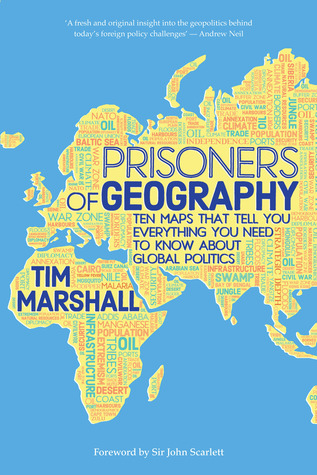
Prisoners of Geography: Ten Maps That Tell You Everything You Need to Know About Global PoliticsAugust has been a really lovely bookish month, with plenty of reading and a nice mixture of bookish events and exciting acquisitions.It's not done the TBR pile any good whatsoever however and I remain convinced that the books underneath my bed are breeding.

A Deadly ThawThe month kicked off with a very chilled long weekend away. Curled up in a caravan on the West Wales coast, I had plenty of time to chill out, drink wine and read books. Because of the glorious weather I didn't spend quite as much time curled up indoors with a book as I'd intended but I still managed a respectable two books in four days, polishing off Sarah Ward's excellent crime novel 'A Deadly Thaw' (which I reviewed as part of her blog tour earlier this week) as well as the fascinating 'Prisoners of Geography' by Tim Marshall. 'Prisoners' was a random pick, chosen because it had a map on the cover (I love maps and am a sucker for a good map in a book) and was the Waterstones non-fiction book choice for August. However it proved to be a really excellent introduction to political geography and, as a result, I finally have a basic understanding of why Britain insists on retaining the Falkland Islands (apparently it's not just for strategic sheep purposes), why no one wants to tango with the problems on the Korean Peninsula and just why India and Pakistan don't see eye to eye! More experienced readers might find the book a little light but, for a lay reader like myself, I thought it perfectly balanced knowledge with readability and humour. 

The Little Red ChairsMy book club pick of the month was Edna O'Brien's 'The Little Red Chairs', which I had been looking forward to having never read an O'Brien before. The plot, which centres around a Bosnian war criminal in hiding in a small Irish coastal village and his affair with a local woman, also intrigued. Sadly, whilst O'Brien's writing style is undoubtedly accomplished, I completely failed to connect with this novel on any level at all.The plot meanders, the characters are insubstantial and I fail to see how it says anything about the Bosnian-Serb war or its aftermath. Fidelma, the 'main' character in as much as the novel has one, has little by way of personality and even less of agency. Even an (in my mind unnecessarily brutal) act of violence at the novel's mid-point fails to provoke anything by way of momentum or change - there's just nothing that provides impetus or direction for any of the characters. Intolerably dull - it would have been a DNF were it not a book club choice. 

Another Day in the Death of AmericaMuch better, although that may not be the correct choice of wording given the subject of the book, was Gary Younge's 'Another Day in the Death of America' which I was lucky enough to get a proof copy of. Due for publication at the end of September, the book is an examination of the lives of ten young people who were shot dead over a 24 hour period in November 2013. The youngest was nine; the oldest nineteen, they lived in hamlets, suburbs and inner city ghettos. None of them made national news. Over the course of interviews with their friends and families, combined with examinations of the wider issues surrounding gun control in America, Younge paints a blistering portrait of another day in a country that sees seven children and teens die daily in gun violence.  I don't want to say too much at this stage as this is definitely a book that deserves - almost demands - a full review, however it was heartbreakingly brilliant and really does deserve to be read by everyone. I would urge anyone who cares about youth and humanity to get this on their pre-order or library hold list ASAP. 

To the Bright Edge of the WorldThe end of the month saw me enjoying the delights of the wonderful Booka Bookshop and an excellent evening in the company of author Eowyn Ivey and blogger Simon Savidge as they discussed Eowyn's new novel 'To The Bright Edge of the World'. I've been able to restrain myself from starting the book as I want to savour it over my upcoming holiday in the Lake District however, based on the contents of Eowyn's talk and Q&A, it promises to be an excellent read!

The Catalyst Killing (K2, #3)I wrapped up the month by treating myself to a bit of crime, with 'The Catalyst Killing', the third in Hans Olav Lahlum's throughly enjoyable K2 & Patricia series. Once again this was a compelling and engaging mystery, this time set around the murder of a young political activist whose boyfriend vanished in mysterious circumstances some years before. Before long K2 and Patricia are drawn into a conspiracy involving young communists, old Nazis and long-buried secrets and it becomes clear that the first death may be a mere catalyst for more extreme events to follow. A great addition to a really excellent series, this is the perfect combination of Agatha Christie style plotting and Nordic noir, although I would suggest that those new to the series begin with the first book - 'The Human Flies' -and work through them in order to get the most from each one. 

In a Dark, Dark WoodAs for current reading, I'm taking a short weekend McEwan's much vaunted novella 'Nutshell'. How I've not read 'Dark Dark Wood', a psychological thriller about a hen party that goes horribly wrong, I have absolutely no idea as it is the sort of thriller I usually devour. So far it's proving to be brilliantly twisty and I'm looking forward to diving into her second novel 'The Woman in Cabin 10' on my upcoming holiday. 'Nutshell' is a more considered read - one that requires constant attention but can be read over a relatively short span - so I've taken the weekend to really focus on it and give it the attention it deserves. As with McEwan's other novellas, it's tightly plotted, astutely observant and a little bit brilliant. I'm also meant to be reading Hannah Rothschild's 'The Improbability of Love' for book club but I bailed a few days ago to start the Ruth Ware and I fear I'm unlikely to return to it. To me it was a book that just doesn't know what it wants to be - sometimes literary, sometimes a romance, sometimes a satire. I'm just not feeling it and, with plenty of other books demanding my attention, life sometimes really is too short to read something you're not enjoying!

As always, I would love to hear your thoughts on any of these books so leave me a comment below, come say hi on Twitter @amyinstaffs or find me on Litsy @ShelfofUnreadBooks. And, until next time...

Happy Reading! x

Thursday, 8 September 2016

BLOG TOUR!! A Deadly Thaw by Sarah Ward


A Deadly ThawAs a long-time fan of the British crime novel, I thoroughly enjoyed Sarah Ward’s debut novel ‘In Bitter Chill’, which I reviewed on the blog last year alongside a Q&A with Sarah herself. Sarah’s was an exciting new voice in British crime fiction, having used her experiences as a crime reader and blogger to shape a cleverly plotted, well-realised debut that bridged the gap between psychological thriller and police procedural and provided realism without too much gore – basically, the perfect formula for the sort of crime novel I enjoy!

When I did the Q&A I was excited to learn that Sarah planned to continue her series, set in the fictional Derbyshire town of Bampton, and to bring back her trio of detectives; DCI Francis Sadler, DS Damian Palmer and DC Connie Childs for a further novel, with the possibility of extending the series beyond this. I was therefore thrilled to receive an advance copy of her second novel, ‘A Deadly Thaw’, which takes place in the early spring, following on from the events of ‘In Bitter Chill’ by a couple of months. I really like the idea of using the seasons as a way of advancing the series and, in ‘A Deadly Thaw,’ Sarah continues to ensure that the weather and the overall sense of the season adds to the overall tone and atmosphere of the novel.

‘A Deadly Thaw’ opens with the discovery of Andrew Fisher in the long abandoned Hale’s End Mortuary with a bullet through his chest. Unfortunately for DS Sadler and his team, Fisher was supposedly killed back in 2004, when his wife Lena was arrested, tried and convicted for suffocating him with a pillow. So who exactly did Lena kill and why would she lie about his identity? When Lena disappears, it’s up to the team, along with Lena’s sister Kat, to follow a trail of clues that leads back into the past but has dangerous implications for the present day.

As with ‘In Bitter Chill’, the novel is narrated in alternating chapters from the viewpoint of the police investigative team and the amateur investigation; in this case that of Kat, Lena’s sister. This works well as it allows the reader to get clues from both sides of the investigation, which heightens the tension as each strand discovers new information that isn’t always privy to the other side. It also results in a lot of cliff-hangers; which Sarah is an absolute master of – there were times I could have screamed at her for leaving off a chapter where she did!

The plot is also very cleverly weaved together, with multiple strands and plenty of red herrings thrown into the mix to distract the characters – and the reader – and keep you guessing right until the very end. It wasn’t until the closing stages that I began to get a sense of whodunit and why, which is how I like my crime books to be – there’s nothing worse than a thriller where you guess the twist halfway through! The plot is denser than in Sarah’s debut however and I have to admit to getting a little lost a couple of times – the pace is so fast that I occasionally missed key information and had to double back to check who someone was or what they’d revealed when last interviewed but, for the most part, Sarah handles the multiple story threads very well and keeps them from getting too tangled whilst maintaining the mystery and tension.

Sarah also does a great job of fleshing out her detectives, adding meat to the bones of the characters she created in ‘In Bitter Chill’, and throwing in some further complications to their personal lives – which has left me waiting with anticipation for the next book! The great thing with this series however is that you can read each novel as a standalone. ‘A Deadly Thaw’ works equally well in isolation, with the case wrapped up fully at the end of the novel and the characters fully introduced at the start for new readers. And, for those crime fans who don’t like detectives that come with more baggage than the average airport (like me!), Sarah keeps the focus on the crime and crime-solving, with the personal stories ticking away in the background and only occasionally coming to the fore.

Overall, I really enjoyed ‘A Deadly Thaw’ and it is a worthy successor to ‘In Bitter Chill’ and marks Sarah out as an author to watch on the British crime scene. The dual structure, clever central mystery and tightly woven plot gives the book real pace and dynamism making this a fast, thrilling read which ratchets up the tension without resorting to brutal violence or overt amounts of blood and gore. Definitely one for crime fans to put on their autumn TBR pile or their Christmas list - my only problem now is that I have to wait for Sarah to write book three!


‘A Deadly Thaw’, published by Faber & Faber, is available now in hardback and ebook from all good book retailers. My thanks go to the author and the publisher for providing an advance copy of the book in return for an honest and unbiased review. 


Sunday, 28 August 2016

An Evening of Bookish Delights

To the Bright Edge of the WorldIt may come as a surprise to any readers living close to bright lights and big cities but, as a denizen of a small village in middle England, it’s a relatively big deal when a local venue manages to get an author of note out into the wilds to visit. Don’t get me wrong, I’ve been fortunate enough to see a few author talks and attend the odd signing over the years but I have to admit to enviously watching the Twitter feeds of London-based bloggers who have a seemingly never-ending round of book launches and evening events to attend.

In recent years however, the glorious Booka Bookshop in Oswestry has been luring increasingly big-name authors north of Watford Gap and into the Shropshire borderlands. Already this year they’ve had Chris Cleave, Harry Parker and Lisa Owens (to name but a few) in attendance and Damon Hill, Ann Cleaves and Alexander McCall-Smith are all on the events calendar for the coming months. The problem, for me anyway, is that Booka is stretching the definition of local – whilst it’s one of the independent bookshops closest to me, it’s still a good 90-minute drive from my home which can seem a little ambitious having done a full day at the coalface on the day job. So despite being very, very tempted on more than once occasion, I’d not yet made it over to one of their events…until this week.

When I saw the announcement that Eowyn Ivey, bestselling author of the magical novel ‘The Snow Child’, was making Booka one of the stops on her UK tour to promote her second novel, ‘To The Bright Edge of the World’, I was very excited. Added to that the fact that she would be in conversation with Simon Savidge, blogger, vlogger and co-host of ‘The Readers’ (one of my favourite bookish podcasts), I decided to throw caution to the wind, ignore the fact that the event was on a school night and book a couple of tickets as a treat for myself and my mum.

Booka never disappoints (apart from the one occasion that I got to Oswestry and it was closed for a stock take – heartbroken!) and, upon arriving, we were instantly made welcome and offered a choice of wine or juice before settling in for the talk. We also got chance to sample some Alaskan Ice Wine, as an homage to Eowyn’s native country and the place in which both of her books are set. It was lovely but very sweet, reminding me of a dessert wine, with a crispness at the end that evoked a little of Alaska.
Eowyn Ivey 
The evening kicked off with Eowyn reading a passage from ‘To The Bright Edge of the World’, which follows Colonel Allen Forrester as he leads an expedition along the Wolverine River to chart its course and map a hitherto unexplored area of the Alaskan wilderness. Told through diaries, letters and other documents, the novel alternates between Allen’s adventures and the domestic dramas of his pregnant wife, Sophie, who initially resents being left behind. Eowyn has a lovely reading voice and I was immediately drawn in by the sense of character and location as she read aloud from one of Allen’s diary entries.

The conversation with Simon Savidge was equally fascinating. Having refrained from purchasing the book until the evening itself, I was pleased that the discussion stayed spoiler-free whilst still giving a real insight into the novel. Eowyn has clearly spent a great deal of time researching the book and her passion for accurately representing Alaska and its people in her work really came through. She also enjoys interweaving fact with fiction, ensuring that Alaskan culture is fully realised but freely admitting to making up the Wolverine River and the specific geography of her story to better allow for the telling of the tale.

Anyone who has read Eowyn’s spell-binding first novel, ‘The Snow Child’, will be delighted to know that she continues to blend reality with a little of the magical in this second book – although she did say that ‘To The Bright Edge of the World’ is deliberately written in a slightly different register. I felt, from the readings given on the night, that the book did seem a little more grounded that ‘The Snow Child’, which had a sense of the otherworldly all the way through. That said, I still got a sense of the wonder and mystery that comes with being a pioneer in an Alaskan wilderness and I’m really looking forward to getting stuck into the book and spending more time with both Allen and Sophie.

A further reading, this time from a section featuring Sophie, was followed by a Q&A from the audience, with questions ranging from specifics about the book to queries about writing life and the trials of getting published. Finally, the evening ended with Eowyn signing copies of her books and chatting with audience members. I also got to meet the lovely Simon Savidge and his partner Chris, along with his mum and sister who were in attendance for the evening (and primed with questions to get the Q&A rolling – good thinking Simon, it worked!) and nerd out about books for a few minutes, which was like the cherry on top of an already well-iced delicious cake of an evening.

All in all, it was definitely worth the trip to head over to Booka for the evening. I love author events but they can sometimes feel a little formal however Booka did a great job of creating a warm and friendly atmosphere and the ‘conversation’ format added to this, giving the evening the feel of a collective booky chat rather than a talk and reading. This was helped in no small part by Eowyn herself, who was absolutely delightful and answered all questions with both good humour and good grace. I can’t wait to start ‘To The Bright Edge of the World’ and hope to be back at Booka for another author evening soon!

Do you enjoy author events? Have you been to any particularly great ones? I’d love to hear off anyone who’s been to a book festival as I’ve not had the opportunity and I’d be interested to know what a larger event is like to attend. As always, drop me a comment down below, say hi on Twitter over @amyinstaffs or find me on Litsy at ShelfofUnreadBooks. And, until next time….

Happy Reading!


x 

'To The Bright Edge of the World' by Eowyn Ivey is published by Tinder Press and is available now from all good bookshops in both hardback and as an e-book. A limited number of signed copies from the Booka event can be ordered on Booka's website here.

Sunday, 21 August 2016

A Tale of Two Childhoods: Foxlowe and The Trouble with Goats & Sheep


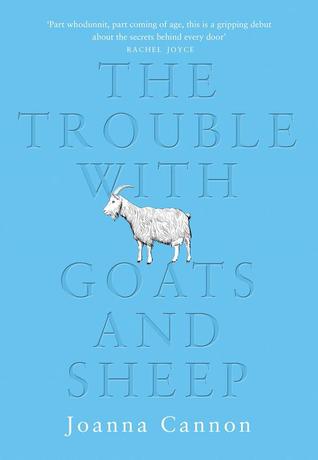
The Trouble with Goats and Sheep Child narrators can, for me at least, often be problematic in adult fiction. Too often the voice fails to convince being either too knowing or irritatingly faux-naïve. It was therefore a great pleasure to read not one, but two fabulous novels this month that featured child narrators in a convincing manner.

Joanna Cannon’s ‘The Trouble with Goats and Sheep’ has been on my TBR pile for a while. I first heard about it from Simon Savidge over at Savidge Reads because, to be honest, he couldn’t stop raving about on both his blog and on The Readers. The novel also got featured in a number of Best of 2016 lists – quite a feat for a book that was published only a few weeks into the year. And, to be fair, I did try to read it when it first came out but it was one of those cases of ‘right book, wrong time’ and I put it back on the shelf about 60 pages in. This month was, however, very much the right time to be reading ‘Goats and Sheep’, which is set in the heatwave of the summer of 1976. So one sunny day, I picked it up and started again.

‘The Trouble with Goats and Sheep’ is the story of 10-year-old Grace and her best friend Tilly. It is also the story of their parents and neighbours on The Avenue and the surrounding streets and provides a fascinating insight into insular communities from a child’s eye-view. At the start of the novel, Grace’s neighbour Mrs Creasy has gone missing, an act that causes some consternation amongst her fellow residents who are worried that she may have discovered the truth behind dark events of one winter’s night a decade before. Acting on some well-intentioned advice from the local vicar, Grace and Tilly begin a quest to find their missing neighbour and, in doing so, begin to uncover the secrets that the other residents have worked so hard to bury.

Although not told entirely from Grace’s perspective (there are switches to some of the adult characters, as well as flashbacks to 1967), it is Grace’s voice that really stood out for me within this book. Although a somewhat precocious 10-year-old, Grace was entirely authentic to me being perfectly balanced between childlike innocence and the increasing awareness of teenage years. And the old adage ‘out of the mouths of babes’ proves to ring true as Grace and Tilly confront the underlying prejudice and pettiness of their small community with an unknowing wisdom. To say more about the story would be to spoil the enjoyment of the narrative, which benefits from a creeping sense of dread as the reader comes to the realisation of what happened in 1967 well before Grace and Tilly get a true sense of events. This was however, one of my favourite reads of the year so far and an extremely impressive debut.

FoxloweI had a few more problems with my second book, ‘Foxlowe’ by Eleanor Wassberg, another debut and another one that I read thanks to Simon Savidge (it was his Litsy feed that did it this time – the book has to have one of the most gorgeous covers published this year). Set in a commune on the edge of the Staffordshire Moorlands, this is the story of Green, her ‘sister’ Blue and their peripatetic childhood with Founders, Richard, Freya, Libby and the rest of The Family, in the apparent idyll of Foxlowe. As with most communal idylls in novels however, it isn’t long before the reader realises that there is something rotten in the heart of Foxlowe. Green and Blue are affected by The Bad, which can only be cured by the light of the double sunset on the Solstice and which, according to Freya, is growing within them.

Once again, it was the voice that really stood out for me in ‘Foxlowe’. Alternating between Green’s childhood in Foxlowe and her teenage years when tragedy has driven her into the outside world, Green’s voice is by turns confidential, assured, insular and creepy and it does a fantastic job of conveying the dark and gothic tone of this twisted novel. Some reviewers have been irritated by the cadence of Green’s voice – the inclusion of many capitalised words and baby-like language as with The Bad, Leavers, The Family and The Founders – but I found this convincing in a child who has grown up without any form of formal education and, arguably, without any education of note at all. I also found that the use of these words, which are imbued with so much meaning for Green and her ‘siblings’ but foreign to the reader, added to the sense of the uncanny that runs throughout the book.

Whilst the narration was accomplished and erred on the right side of creepy, I did however have major issues with the plot. Without giving away major spoilers, all I will say is quite how none of the other adults realise that Freya is as mad as a box of frogs baffles me. Whilst I get that these are ‘adults’ who have deliberately chosen to walk away from the responsibilities of everyday life, the fact that they would wilfully choose to ignore child cruelty on the scale sometimes shown by Freya just didn’t wash. Whilst Freya is a truly hateful character throughout, she isn’t violent or dangerous (at least not in the beginning) and seems instead to operate through a mixture of fear, anger and spite. So how does she exert so much power and influence through the commune? And whilst I get that Freya evidently has severe mental health issues (although enough with the ‘evil’ characters having mental health problems already please! I could write a whole other blog post on that one), that alone just didn’t seem to justify her malicious hatred of Green and Blue. I read a brief but enlightening interview with Eleanor Wassberg in NewBooks Magazine in which she talked about the characters’ lack of agency due to ‘shoal’ mentality – the idea of a communal mania. And whilst this can and does happen in real life (take instances of mass suicide within cults for example), it usually has a charismatic central figure at the heart of it. For me, Freya was just not charismatic enough – I didn’t buy into the fact that all of the other characters would have bought into her hippie shtick and I think it led to an increasing disbelief with the events of the novel.

That aside however, I do think ‘Foxlowe’ is an accomplished debut and I would definitely recommend it to fans of the Victorian gothic, although I would add in a trigger warning for scenes of child abuse. Wassberg is clearly a very accomplished writer and, whilst I had issues with the plotting, I do think that the compellingly eerie quality of Green’s voice resonates with the reader long after you turn the final page. It was also nice to see my home county featured in a novel – although it is the setting for a cult so…..maybe not!

So if you’re looking for convincing young narrators, you can add both ‘The Trouble with Goats and Sheep’ and ‘Foxlowe’ to your reading lists! If you have read either book, please let me know your thoughts by dropping a comment below or over on Twitter @amyinstaffs or Litsy @ShelfofUnreadBooks. As always, I’d love to know what you’re reading or if you have any more recommendations for adult books with child narrators that you think I’d enjoy. And, as always, until the next time….


Happy Reading! x