Sunday, 26 June 2016

REVIEW: Shrill by Lindy West

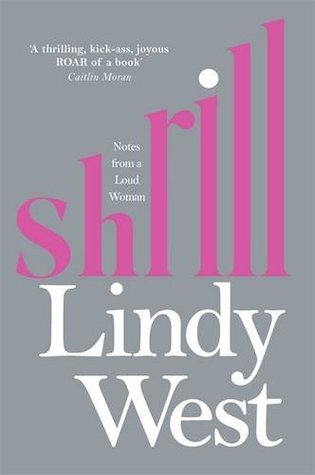
Shrill: Notes from a Loud WomanA confession: when I received a copy of Lindy West’s ‘Shrill’ (subtitled ‘Notes from a Loud Woman’), my first thought was ‘who?’ And I admit that the thought of reading a memoir by someone I’d never heard of held little appeal given memoir isn't one of my favourite genres. Subsequent investigation however has shown that West is a respected journalist with a weekly column in The Guardian, a former blogger for Jezebel.com and a culture writer for GQ. She’s also a well-known Twitter commentator with over 71,000 followers. Despite all this I’ll also admit that, cynically, the thought crossed my mind that ‘Shrill’ might be yet another humorous rage-against-the-patriarchy manifesto to spring up in the wake of Caitlin Moran’s ‘How to be a Woman’; a thought not quashed by Moran’s blurb on the cover.

How wrong I was on all counts. Whilst West certainly can (and does) use humour to her advantage when needed (the book explores, amongst other topics, her stint on the stand-up comedy circuit in her native Seattle), ‘Shrill’ is a considerably angrier book whilst, at the same time, being less actively concerned with a traditional feminist agenda. And whilst both books examine how the writers came to develop their voice, ‘Shrill’ is arguably more focused as a memoir, examining the specific events that led West from cripplingly shy teenager to vocal, fearless and provocative woman who is unafraid of being loud.

“Women matter. Women are half of us. When you raise every woman to believe that we are insignificant, that we are broken, that we are sick, that the only cure is starvation and restraint and smallness; when you pit women against one another, keep us shackled by shame [….] that moves the rudder of the world.”

Her journey takes her from tackling the issue of fat-shaming, to Twitter trolls via rape culture, workplace misogyny and the free speech debate. We follow West as she comes to identify herself firstly as a woman, then as a fat woman, then as a fat funny woman and finally as a fat funny woman with a voice that deserves to be heard. As such the book is definitely gentler in its earlier stages and I do feel it takes a few chapters for the tone to even out and West to get into her stride. From the defiant chapter ‘Hello, I am Fat’ onwards however, it’s a fearless shout against social expectations, which confronts a number of unpalatable and uncomfortable truths about women’s lives.

“This is how society has always functioned. Stay indoors, women. Stay safe. Stay quiet. Stay in the kitchen. Stay pregnant. Stay out of the world. If you want to talk about silencing, censorship, placing limits and consequences on speech, this is what it looks like.”

As with the best writing of this type, West is excellent at taking aim at an issue, skewering it to a post and picking it to bits with a rapier sharp wit and more than a dash of black humour. What is refreshing however, is that she doesn’t just want you to laugh along with her. West wants you, the reader, to engage. To be angry, to question and to challenge. To stop being quiet. She makes statements that provoke, and creates catalysts for conversation.

“Women are told, from birth, that it’s our job to be small: physically small, small in our presence, and small in our impact on the world. We’re supposed to spend our lives passive, quiet, and hungry. With this book, I want to obliterate that expectation.”

I consider myself a feminist but I found myself questioning my own position on the language of ‘clean eating’ and ‘health’, on the comedy I’ve previously found funny and on the defensive stance (i.e. ‘do not feed the trolls’) so many female commentators (myself included) take when encountering misogyny on the internet.

All in all, this makes ‘Shrill’ a very different book to ‘How to be a Woman’. Where Moran laughs at misogyny and patriarchy, making it seem small by reducing it to absurdities; West is confronting it in a different way, locking horns with the trolls and roaring into the void, daring it to challenge her. Both are valid and increasingly necessary approaches to being an engaged woman in the modern world. As such, ‘Shrill’ is a very welcome addition to the conversation which will both anger and delight in equal measure. Having read it I not only know who Lindy West is, but I no longer think of being a shrill; of having an opinion and of that differing to someone else’s, as a bad thing. And for that, Lindy West, I thank you.


‘Shrill: Notes from a Loud Woman’ by Lindy West is published by Quercus and is available now as a hardback, ebook and audio from all good bookshops and retailers. My thanks go to the publisher and Real Readers for providing a copy of the book in return for an honest and unbiased review. 

Tuesday, 21 June 2016

Independent Bookshop Week Tag!

It’s Independent Bookshop Week (#IBW2016) again – a celebration of all things books and bookshops! Kicking off on Saturday just gone, the week is full of bookish activities taking place across independent bookshops nationwide including author events, signings, the #IBW2016 book awards and plenty of bloggers and vloggers taking part in a #bookshopcrawl! And, as this year marks 10 years of Independent Bookshop Week, the lovely people @booksaremybag created a fun and interesting tag as well! So, without further ado, here are my answers to the #IBW2016 Tag!


What books are currently in your bag?
The Glorious HeresiesI have lots of books in my bag at any given time as I always carry my Kindle in my handbag so that I am never without something to read (it comes in handy when queuing at the post office)! I’ve got a NetGalley proof of ‘Smoke’ by Dan Vyleta which I’ve just started on that. I do prefer reading physical books however – you just can’t beat the feel of a ‘proper’ book – and am currently reading ‘The Glorious Heresies’ by Lisa McInerney, which won the 2016 Baileys Prize. That lives in my book bag, where I also keep my bullet journal.

What’s the last great book you read?
The last book that really affected me was Hanya Yanigahara’s ‘A Little Life’, which I read last year. That book gave me all sorts of feels, from elation through to anger and sorrow. I felt the ending was a bit of a cop out but, overall, it’s a book that’s all sorts of amazing and it made a lasting impression. More recently, ‘The Natural Way of Things’ by Charlotte Wood and ‘The Girls’ by Emma Kline have been impressive reads and are both well worth seeking out this summer.

What book have you gifted the most?
It’s a toss-up between ‘Pride and Prejudice’, which I gift to anyone who hasn’t yet read it as proof that the classics can be both funny and relevant, and Caitlin Moran’s ‘How to Be a Woman’, which gets foisted on all younger female friends and relatives the moment they turn eighteen because I think it should be mandatory reading for all women. Both books, in their way, are remarkable and the Jane Austen can always be found in a beautiful edition, making it ideal for gifting!

What’s your favourite independent bookshop?
Booka Bookshop in Oswestry is, sad to say, probably my nearest independent bookshop. I say sad because I live in the next county over so that fact that the nearest independent is over an hour away shows why you should go out and support your local booksellers! Fortunately, Booka more than makes up for the travelling distance by being an amazing bookshop with a wide selection of fiction and non-fiction, covetous author-signed stock, a stellar line-up of author events and readings and super-friendly and knowledgeable booksellers. Plus, they have tea and cake (amazing cake) and what shop isn’t made even better by the inclusion of those?!

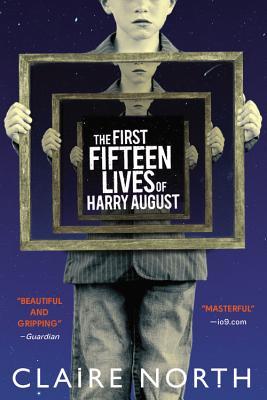
The First Fifteen Lives of Harry AugustWhat’s been your favourite book recommended by a bookseller or Booktuber?
I doubt I would have picked up ‘The First Fifteen Lives of Harry August’, a novel about a man who cannot die, if it wasn’t for my bookseller friend Claire waving a copy under my nose. Claire works at my local branch of Waterstones and we have quite similar tastes so I take her recommendations very seriously. She was spot on with ‘Harry August’ – I raced through it and am about to start author Claire North’s latest book ‘The Sudden Appearance of Hope.’

What’s your favourite bookshop memory?
I don’t think there’s one particular incident – I have so many happy memories of bookshops that it is hard to narrow them down. I do however fondly recall rocking up in Waterstones with my first year university reading list and having a genuine excuse to buy two bags full of books (plus a few non-list books as well because what else is a student loan for?!). And I really look forward to my book group every month and have many happy memories of being there – everyone is friendly and the discussions are always lively without ever veering into combative. Plus, we have cake, which helps us get through even the toughest of books!

What do bookshops mean to you? What do you love about them?
Bookshops are my retreat from the everyday worries of the world. I love the aura of peace that comes with being in them – there’s just something lovely and comforting about being surrounded by piles and piles of books and by people who love them as much as you do. Discovering the best bookshops - the ones with the carefully curated stock that feels like it was all picked just for you – can feel like making a new friend.

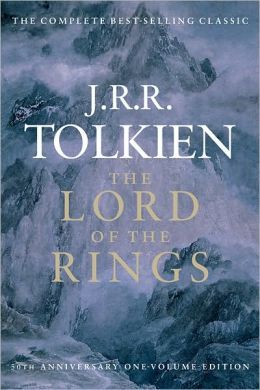
The Lord of the Rings (The Lord of the Rings, #1-3)What are the books that made you? Which books have most affected or influenced you?
I was very fortunate to grow up in a booky household so books and reading have been part of my life since I was very small. I have fond memories of being read Beatrix Potter and Roald Dahl, as well as Grimm’s Fairy Tales, One Thousand and One Nights and the exploits of King Arthur and the Knights of the Round Table. Growing older, Jane Austen became a favourite after my mum lent me ‘Pride and Prejudice’ when I ran out of books on holiday - I soon hoovered up her remaining novels before moving onto ‘Jane Eyre’ and other classics. ‘The Lord of the Rings’ remains my favourite book of all time however and I spent many happy evenings tucked up in bed while my Grandad read me this epic – he kept having to read the same bits twice when I fell asleep! Later, I read them for myself and realised how carefully Grandad must have edited them to remove the long descriptive passages and keep the action moving forwards to keep me engaged. I usually re-read ‘The Lord of the Rings’ every year – there’s just something about the story that gives me great comfort and takes me instantly to my happy place.
Rivers Run: An Angler's Journey from Source to Sea 
What book did you gift for Father’s Day?
My dad is a keen fisherman so, when I walked into Booka and saw ‘Rivers Run: An Anger’s Journey from Source to Sea’ by Kevin Parr on prominent display, I thought they must have seen me coming! I hope he enjoys it.

What book is currently at the top of your TBR pile?
The Essex SerpentMy TBR has exploded a bit recently so I’m trying to work my way through a few on it before buying any more books – easier said than done! I have just bought ‘The Essex Serpent’ by Sarah Perry and cannot wait to start it – the cover called to me from across the bookshop and I’ve heard that the writing inside is just as beautiful as the exterior! I’m also really looking forward to reading ‘Homegoing’ by Yaa Gyasi, a debut that’s already making waves in the US – it’s about two half-sisters, one who is married to a slave-trader and another who is a slave herself and is sold to the US plantations. The novel follows their descendants over many generations – it’s a book I think we’ll be hearing a lot about in the coming months.

So, now that you’ve read my #IBW2016 Tag, get thee to your nearest independent bookshop and go celebrate Independent Bookshop Week 2016! And don’t forget to join in on Twitter using #IBW2016 and by following @booksaremybag. You can also follow me, @amyinstaffs, and you can find me on Litsy @ShelfofUnreadBooks. Whatever you’re up to and wherever you go, enjoy the rest of Independent Bookshop Week 2016 and, until next time…

Happy Reading! x

Tuesday, 14 June 2016

REVIEW: The Girls by Emma Cline

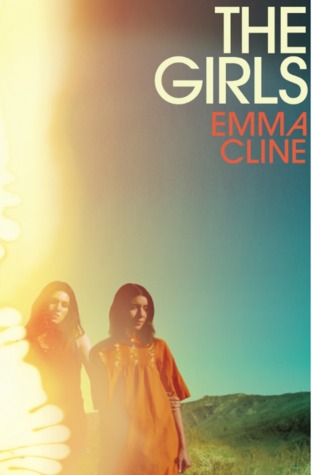
The GirlsSaturated with the heat of a Californian summer, ‘The Girls’ (published 16 June) is lead debut for Vintage in Summer 2016 and has featured on countless ‘Ones to Watch’ list including The Guardian, Stylist and The Readers podcast. The pre-release buzz for this book has been seriously big with luminaries such as Mark Haddon, Lena Dunham, Emma Healey and Jennifer Egan providing blurbs for the advance copies and film rights already optioned. Such hype is something that, as a reader and a blogger, both excites me and sets my skepticism meter to high. I’ve read so many reasonably good books that, due to being over-hyped, have ended up being a bit of a disappointment (yes, sadly I’m looking at you ‘The Girl on theTrain’). So it was with both excitement and trepidation that I settled down one sunny afternoon to start this one.
Evie Boyd is fourteen and desperate to be noticed. It is 1969 and the empty days of summer stretch before her filled with a Californian heat of longing, desperation and despair. Then Evie sees The Girls. Hair long and uncombed, dirty dresses skimming the tops of thighs, cold snatches of laughter amidst the heat. Roos, Donna, Helen and, most of all Suzanne. Suzanne with her dark hair, her easy manner and the fire in her eyes. Fascinated, Evie is soon drawn in. Drawn down the long dirt track to the ranch, deep in the hills and shrouded with rumours of frenzied gatherings and teen runaways. Drawn to Russell, who sits at the centre of it all. Drawn down the path from girlhood to womanhood, a path that leads from fascination to enthrallment.
This is not the most unique of plots, centring as it does on obsession with a cult-like figure and the consequences of being drawn in to a series of events that you barely understand. What Emma Cline does that elevates ‘The Girls’ above the level of the ordinary however is to perfectly capture the alluring appeal of such a setup to a bored, desperate teenage girl, unsure of her place in life or her path to the future. Cline has a gift for observation, especially of young woman, and she shows the many ways that the vulnerability of this crucial age can be manipulated; how unseen girls and women can quickly go from being ignored to being used, and how they might desire to be both.
Resonating with Evie’s longing and desperation, this is an exhilarating thrill-ride of a novel filled with sharp observations of teenage life. Rarely has a teenage voice been captured so completely, with all of its wistfulness, hope and disgust. As a reader, you cringe with her in her awkwardness and you feel for her desperate attempts for recognition whilst, at the same time, wanting to shout and drag her away from the dangerous path she doggedly pursues. As such, she is far from sympathetic but she is recognisable to anyone who has been or known a teenage girl.
The same cannot perhaps be said of the novels other characters – The Girls, Russell, Mitch, Guy, Evie’s parents, her childhood friend Connie. Whilst Evie is crystal clear, the rest of the narrative is dream-like and the other characters’ figure as if in a haze. Whilst this does fit well with the style and overarching narrative arc, at times it can be frustrating because it clouds Evie’s motivations. Other than the fact that she is desperate to belong, I failed to see what so attracted Evie to Suzanne for example because I failed to really see Suzanne as a character in her own right. The clarity of Evie and her voice is fantastic but it does leave everyone else viewed as if from a distance.
I should also add that there are a number of disturbing elements in this book and trigger warnings for sex (including some scenes that definitely border on rape, or at least coercion) and drug use. It is, at all times, completely justified by the needs of the plot and the characters but it doesn’t stop the book being intensely brutal at times and some scenes are particularly unsettling.
Very minor niggles aside however, I do think that this is an impressive novel written with a commanding authorial voice and a confidence that belies the fact this is a debut. Emma Cline has crafted a novel that completely encapsulates the dangerous and complicated mix of desire, confidence and despair that can bubble beneath the surface of teenage life and she has inhabited a voice that will stay with you long after the final page is turned. Hyped it may be but this is one debut that can stand up to the scrutiny and deserves to be in many a suitcase this summer.

The Girls by Emma Cline is published by Vintage on 16 June 2016 and will be available from all good booksellers. My thanks go to the publisher for providing an advance review copy in return for an honest and unbiased review. 

Monday, 6 June 2016

May Wrap Up 2016

May has felt like a month where I haven’t really got a lot read, which is daft now I look back and realise that I read no fewer than six books – five of which are included in this wrap up with one to follow in a review next week. I suppose it is because, whilst I greatly enjoyed many of the books I read this month, I’m in a bit of a book slump at the moment and my meh about some of May’s choices is probably just because of that. I’m going to cut myself some slack for June and maybe take a few days off from reading to see if that helps. In the meantime, onto May’s wrap up!

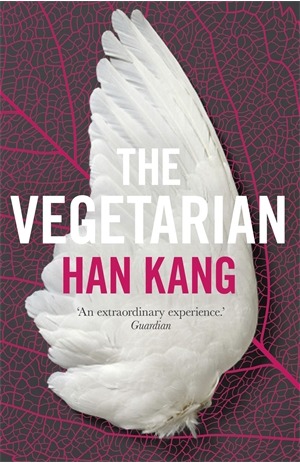
The VegetarianThe Vegetarian by Han Kang (translated by Deborah Smith)

It is very rare to come across a novel that lives up to the promise of its cover blurb but reading Han Kang’s ‘The Vegetarian, which has recently won the acclaimed Man Booker International Prize, really is ‘an extraordinary experience’.

Explaining what the book is about is difficult because, for such a slim work, it really does pack a lot in however, at its heart, this is the story of a South Korean suburban housewife called Yeong-Hye who decides to give up meat as a result of a terrifying dream. This unusual decision has repercussions throughout her family, as we follow first her frustrated husband, then her brother-in-law and finally Yeong-Hye’s sister as they probe her reasoning, her mental capacity and her very existence.

Originally written as three interconnected novellas, each section reveals a different aspect of Yeong-Hye and the motivations behind her passive rebellion, as well as the impact that her startling decision has had on those around her. From her bland husband’s descent into sexual sadism, which eventually drives Yeong-Hye to self-harm and hospitalisation, we then move to her brother-in-law who makes the unwitting young woman the centre of his erotic fantasies and his increasingly unhinged video artworks. Finally, we are left with Yeong-Hye’s sister, her mirror image, who is struggling to connect her sibling’s fantasies of escaping her bodily prison with the reality in which she is now forced to live.

Filled with provocative imagery, surreal and compelling storytelling and a quiet intensity, this is a powerful novel about mental illness, personal freedom and societal taboo. If you don’t like the surreal and metaphorical, ‘The Vegetarian’ probably isn’t going to be for you but, for readers who don’t mind having to dig a little, this is a quietly intense novel with a great deal to unearth.

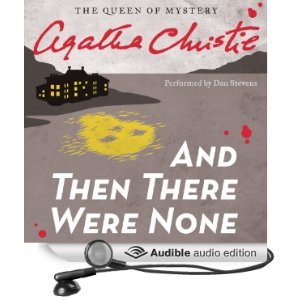
And Then There Were NoneAnd Then There Were None by Agatha Christie (read by Dan Stevens)

Sometimes (as in, when you're in a book hangover from an intense and complex novel like 'The Vegetarian') you just need to take a break and get a bit of Agatha in your life. I’ve generally only read Marple or Poirot before so this, a standalone about ten strangers marooned on an island and gradually being bumped off one by one, was a bit of change. As with all of her works however, this is a fiendishly plotted, twisty romp filled with more red herrings than you'd find in the average fishmongers. Plus the ending is, for me anyway, right up there with ‘Murder on the Orient Express’! 


It was great to listen to this as an audio - excellently narrated by Dan Stevens - as it really bought out the psychological tension of the story and the gradual unraveling of the characters. This is a far more psychological book than Christie's series novels with a real focus on the characters and their various faults and virtues. 

I can see why the novel causes difficulty for adapters and can be fraught with controversy however. Some of the language that Christie uses is extremely distasteful to modern readers/listeners and this can be quite jarring when you come across it. But personally I feel that it's important to remember the era the book was written in and also that these comments, when they appear, are reflective of Christie's characters' views and not necessarily of Christie herself - as with all her work, there is very little by way of authorial voice. So whilst that doesn't stop the comments being distasteful, I don't feel it stopped me enjoying the remainder of the story and it added to my perception of the character who expresses these views.  All in all, this is Christie at her most skilled when it comes to plotting & manipulation of her reader.


CarolCarol by Patricia Highsmith

I had been so looking forward to reading this, which I have heard praised by numerous book bloggers since its rediscovery last year when the critically acclaimed film adaptation, starring Cate Blanchett and Rooney Mara, was released. Billed as one of the first lesbian love stories to feature a happy ending, ‘Carol’ (originally titled ‘The Price of Salt’) is the story of awkward young sales assistant Therese, bored of her job and her boyfriend, who meets glamorous suburban housewife Carol and promptly falls madly in love with her.

The novel is often praised for being an honest look at the role and expectations of women in 1950s society and the dangers faced by those who dared to step out of line. Unfortunately, whilst I could completely see that this was what the story was trying to do, I just didn’t have any investment in the characters to make me care about their fate. Therese comes across as a whiney teenager with no sense of direction and Carol as a predatory older woman who picks up a young plaything because she’s bored and lonely. As for the men in their lives, Carol’s (soon to be ex) husband barely figures until he’s needed for plot purposes and Therese’s annoyingly optimistic boyfriend Richard was a one-dimensional irritant.

I always try to be somewhat positive about a book on this blog and I really don’t mean to flame ‘Carol’ but I had such high expectations and I was so disappointed. The whole novel felt like a bad Merchant Ivory film where everyone stands around staring at each other and its meant to mean something. I get that a lot of people love this novel but I really couldn’t get on with it and that was entirely down to the characters – Highsmith’s writing is fine and the plot, such as it is, hangs together well. But all of the characters felt like actors playing the worst kind of caricatures rather than people with motivations, whims and desires.

That said, I did subsequently watch the film adaptation to see how that handled the story and I have to say it was absolutely fantastic. Suddenly I could see why this is considered to be a brave and honest love story – I truly felt for Therese and Carol, I wanted to thump Harge and shout at Richard, I felt angry about the position these women were put into simply for being themselves. It’s so beautifully acted and the additional scenes that show Carol’s perspective (which you don’t get in the book) give motive to many of her seemingly cruel and inexplicable actions in the novel. The film is a marvel and I’d highly recommend you go watch it. As for the book? Well for me this was a rare instance of the film massively outclassing its source material but I am in the minority – the book has many admirers and I’d always say to try it for yourself.

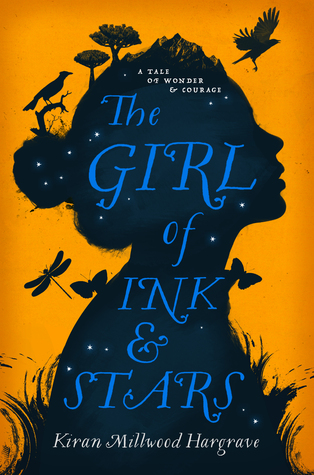
The Girl of Ink and StarsThe Girl of Ink and Stars by Kiran Millwood Hargrave

I will freely admit that I picked this YA book up entirely because of the cover. As an object this is just gorgeous, from the stunning cover artwork, through the maps on the French flaps, to the compasses and map lines drawn on each page. The story itself is, however, marginally less successful than the production values.

Thirteen-year-old Isabella lives with her cartographer father on the island of Joya, which is ruled by a despotic governor who forbids anyone to leave. When a village girl is killed by an unknown monster and Isabella’s best friend goes missing, Isabella disguises herself as a boy in order to lead the search into the island’s forgotten heart.

It’s a story with a nice blend of old-fashioned adventure, teenage angst and a dash of magical realism but it feels a little flimsy at times. This is a middle-grade novel so I’m not expecting the plotting to be Dickens or anything but I did feel a lot of the characters’ lack motivation, particularly the adults. I wanted to know more about why the governor was so cruel and what had happened that led him to take over the island. Similarly, Isabella’s dead brother is mentioned a lot but never figures in the plot itself so, to me, there was no reason for her to even have a brother, dead or otherwise. There were quite a lot of these little niggles – characters introduced and then tossed aside without any relevance to the plot, ancient myths that seem significant but never crop up again – that spoilt an otherwise very enjoyable blend of myth and adventure. That said, I did really like the focus on two strong and likeable female protagonists and the power of their friendship.

All in all, this was a quick and easy read and there is a lot to like about it but I just felt the story could have been a bit tighter, without quite so many loose ends and irrelevant diversions. It is gorgeous though and would make a great gift for any young readers in the family.

Satellite People (K2, #2)Satellite People by Hans Olav Lahlum

A simply ingenious continuation of the K2 detective series which began with ‘The Human Flies’ (reviewed back in March). This second book sees Norwegian Police Inspector Kolbjørn Kristiansen investigating the death of multimillionaire businessman and former Resistance fighter Magdalon Schelderup at a family dinner. Disliked and despised, even by his nearest and dearest, it soon becomes clear that only one of Schelderup’s ten dinner guest could have committed the crime. But which one was it? It isn’t long before K2 returns to the home of the brilliant and acerbic Patricia to enlist her in untangling the web of deceit that lies around Schelderup Hall.

Lahlum's plotting is up there with Christie's and will keep you guessing until the very end. And his detective duo, with their Holmes & Watson pairing, are engaging and likable - even if you share Patricia's frustration with K2 (especially when it comes his fallibility for attractive young women) at times! The 1960s setting does give the books a golden age feel but they do deal with issues such as homosexuality and single parenthood that Christie and her cohorts would have avoided, making Lahlum’s series perfect for fans of golden age crime looking for something with a modern twist.

And that was May! As I said, June promises to be a little different because I do want to see if I can shrug off this mini-slump. I’m butterflying from one book to another at the moment – a sure sign that I’m struggling – so I think I might take a few days off, chill out with some magazines and maybe enjoy some storytelling in another format such as a film or a game. That said, I do still have a teetering TBR pile with some very interesting looking books on it so I really hope it won’t be long before I’m back reading again. 

As always, I’d love to get your thoughts on any of the books mentioned, or any tips you might have on getting out of my book slump, so please do tweet me @amyinstaffs, say hi on Litsy (ShelfofUnreadBooks) or drop me a comment down below. And, until the next time…


Happy Reading! x
Sunday, 29 May 2016

A Little Catch Up

Just a quick post this week with more of a general bookish life/reading update than a specific theme. 

Firstly, I wanted to mention a new book-based iPhone app (alas, no Android version yet) called Litsy. As the always excellent Book Riot site put it, Litsy is what would result if Goodreads and Instagram got together and had a baby - it's a clean-looking and easy to use app that allows you to post pictures of your current reads and write short blurbs, reviews and quotes from them. There is also an organisational element which allows you to create 'stacks' of books (To Read, Reading and Read). 

I've only been on it a couple of weeks but it definitely has a cleanness about its design that Goodreads lacks and it is considerably easier to navigate, allowing you to find fellow book nerds easily and to start creating content and entering into the community quickly. That said, brevity is key on Litsy, with each post limited to 300 characters so you'll still want to head to Goodreads to get a spread of opinion on a book or provide longer commentary. For anyone with an iPhone who likes books however, Litsy is a nice addition to book-based social media and I'd highly recommend giving it a try. You can find me on there at ShelfofUnreadBooks if you want to come say hello and check out my current reads.

Books on the Nightstand
I'm also starting the make summer reading plans, thanks in no small part to the annual Books on the Nightstand summer book bingo. If you haven't discovered Books on the Nightstand (BOTNS for short) yet then you've got a treat in store because it's an excellent weekly books podcast from across the pond in the USA. Alas, hosts Anne and Michael have recently announced a hiatus on the podcast from the end of June but there are several years worth of episodes available for download on their website (which they are keeping live for at least the next two years), which should provide plenty of listening joy for the uninitiated. 

For the last few years Ann & Michael have hosted a BOTNS Summer Book Bingo on the show. The idea is to print a randomly generated 5 x 5 square 'bingo' card which lists different categories of books and then attempt to get bingo over the course of the summer by reading a book that will fit each box. So, for example, your bingo card might include 'book set in another country' or 'over 500 pages' or 'by a Latin American author'. The idea is to widen your reading and take you out of your comfort zone whilst, at the same time, having a little fun and turning it into a bit of a game or challenge. The rules are what you make them however Ann & Michael suggest that you:

  • Interpret the categories as you see fit
  • Don't use one book for more than one square
  • Use the Free Square for any book you want to read that won't fit into a category

I tried it last year and did find it a great way to get around to finally reading some books that have been 'bench-warming' on my shelves for a little while but that fitted the categories on my card. As I'm not a fan of a lot of the beach reads and airport fiction that fill shop shelves at this time of the year (I'm not dissing it, it's just I'm not a massive fan of romance novels and thrillers, which often seem to dominate summer reading lists), it's also a great way to keep me reading over the summer months. Last year, I managed to get 'bingo' on two lines before the official end date (the bingo technically runs from Memorial Day weekend in the States (i.e. this weekend) to Labor Day at the beginning of September) but this year I want to aim for full house and complete my card, so 25 books in total between now and September. The link to get a card is, as far as I know, live all year however so you can set whatever end date you want - or even keep printing cards if you enjoy the game and want to continue once you've completed one card. If you want to give it a go, you can print off a bingo card here - let me know in the comments how you get on! 

The VegetarianAs a result of the BOTNS Summer Bingo ('translated fiction' is one of my squares), I'm currently reading Han Kang's 'The Vegetarian', which recently won the International Man Booker Prize. I'd heard such amazing things about this novel on a lot of book podcasts and also from some of my favourite people on Twitter so I've had it on my shelf for a couple of months but only now had the impetus to pick it up. I'm about a third of the way through so far (at little over 150 pages, it should be a quick one to read) and it is certainly a very accomplished novella, which appears to have been brilliantly translated into a spare, precise English by Deborah Smith. The content however is, whilst stunningly rendered in prose, quite disturbing and some of the imagery is very visceral. I look forward to reading the rest and being able to give you a review in my wrap up next week.

As always, I'd love to hear what you've been reading so come say hi on Litsy (ShelfofUnreadBooks), Twitter (@amyinstaffs) or post a comment below! And, as always, until next time...

Happy Reading! x

Monday, 9 May 2016

REVIEW: What Belongs To You by Garth Greenwell

What Belongs to YouWhen an author whose work I admire provides blurb for a book, I do tend to at least check it out. But when that author is Hanya Yanagihara, who wrote emotional rollercoaster ‘A Little Life’ (a book that had me in bits for most of last summer, see here), I really sit up and take notice. So when Hanya described Garth Greenwell’s debut novel ‘What Belongs To You’ as “a searching and compassionate meditation on the slipperiness of desire, the impossibility of salvation, and the forces of shame, guilt, and yearning that often accompany love”, I knew I wanted to read this book. And when Simon Savidge then raved about the novel on both his blog and in his You Wrote the Book podcast, it went straight to the top of my TBR. And, sure enough, it did not disappoint.

‘What Belongs to You’ begins with an American teacher entering the public bathroom beneath Sofia’s National Palace of Culture looking for sex. There he meets a young hustler called Mitko and so begins a relationship that comes to define his life – and that could also possibly destroy it. As our unnamed narrator tells his story, we are rapidly drawn into the dark dance that these two characters’ conduct around each other – a twisted waltz of desire and eroticism, love and manipulation that examines the ways in which our backgrounds and cultures, private shames and desires can shape the way we are.

It is difficult to believe that this is a debut novel, such is the power of Greenwell’s writing. This is a deeply lyrical book, which manages to render even the basest human actions and feelings with vivid, poetic intensity. Take, for example, the beginning of the narrator’s first encounter with Mitko in the public bathrooms under the National Palace of Culture:

“Even as I descended the stairs I heard his voice, which like the rest of him was too large for those subterranean rooms, spilling out from them as if to climb back into the bright afternoon that, though it was mid-October, had nothing autumnal about it; the grapes that hung ripe from vines throughout the city burst warm still in one’s mouth. I was surprised to hear someone talking so freely in a place where, by unstated code, voices seldom rose above a whisper.”

This is a man on his way into a public bathroom to pay a young man for sex but it is written with such richness and such sensual detail that it lends the encounter an almost poetic air. And the whole novel is like this – from the descriptions of dingy hotel rooms and Soviet era blokove to the narrator’s evocation of his childhood in suburban America and his first, intense friendship with a local boy. It is hauntingly beautiful writing that lingers long after you turn the final page.

And it isn’t just the writing that packs a punch. It is remarkable that the novel is less than 200 pages given the emotional resonance of the story, which examines the nature of love and lust, of desire and its consequences. Throughout his encounters with Mitko, which change from paid-for erotic encounters into a more complicated mixture of yearning, friendship, dependence and guilt, and his recollections of childhood rejection and a longing to be loved and accepted, the narrator remains a complex enigma, hidden from the reader because he remains hidden from himself. Mitko is also elusive, weaving in and out of the story and wearing many faces, both beautiful and terrible and often both at once. For a reader, it is writing that asks a lot of questions and offers little by way of answers. What is love and what is desire? Who is the predator and who the prey? Can we ever really know another unless we know our own selves?

As you can probably imagine, this does not make ‘What Belongs To You’ an ‘easy’ read. Although not a lengthy book, it makes many demands on the reader - rewarding close attention to the subtleties of human interaction via writing that insists on being savoured not sped through. Fans of pacy plots and sharp dialogue should look elsewhere, for this is a Merchant Ivory novel rather than a Hollywood blockbuster. Neither is it ‘light’ in any sense of the word. This is, at times, an unremittingly bleak book, which offers little by way of salvation for its characters. It’s not quite ‘A Little Life’ bleak but, as with Yanagihara’s bestseller, the forces of shame and guilt cast long shadows into the characters’ lives. Take the time to get through this however, and you’ll discover a richly layered novel with an aching, emotional heartbeat that makes ‘What Belongs To You’ a commanding debut from someone who is sure to become a literary writer to watch out for.


My thanks go to NewBooks Magazine and to the publishers, Picador, for providing an advanced copy of this book in return for an honest and unbiased review. An edited version of this review may appear on the Nudge website and in NewBooks Magazine. ‘What Belongs to You’ by Garth Greenwell is available now in hardback and e-book from all good bookshops and retailers. 

Monday, 2 May 2016

April Wrap Up 2016

It almost felt like I didn't read very much during the month of April but I appear to have still managed four books, in addition to 'Eligible' and 'The Midnight Watch', both of which I reviewed earlier in the month. There will also be a review of Garth Greenwell's 'What Belongs to You' going up at some point as I finished that today, just a little too late to be technically included in this wrap up. So apparently I've been more productive that I gave myself credit for! 

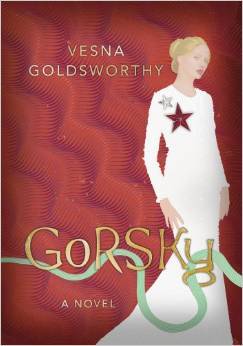
GorskyGorsky by Vesna Goldsworthy

I picked this up because it was featured on the 2016 Baileys Prize longlist. Of all the literary prizes, the Bailey’s seems to most mirror my own reading tastes so I decided to give ‘Gorsky’ a go in spite of it apparently being a modern re-telling of ‘The Great Gatsby’, a novel I felt distinctly meh about when I read it at uni.

London dances to the turn of Gorsky’s millions but the Russian billionaire himself is proving elusive. Until that is, he turns up in a down-at-hell bookshop to request that Nicholas ‘Nick’ Kimović builds him the best private library in Europe. Drawn in by Gorsky’s alluring power and enviable lifestyle, Nick is soon attending swanky parties, where the elite of British society rub shoulders with newly arrived emigres from Russia and the Baltics. And, at the centre of it all is Gorsky – his money, his palatial new home and his abiding love for Natalia, the Russian wife of one of his new English neighbours.

As you can probably tell from the synopsis, this is a playful reimagining of ‘The Great Gatsby’ and the characters survive their updating in surprisingly good shape. Certainly I found Gorsky’s Natalia considerably less vapid than Gatsby’s Daisy, and Nick himself is an interestingly dislikeable narrator with a unique outsider’s perspective, both in terms of his class and his status as a Serbian immigrant, neither British nor Russian but a keen observer of both. All of the glitz and glamour of the original is here with a modern sprinkling of casual sex and even more casual drug abuse (both a little too casual and a little too frequent in my opinion).

So this is ‘Gatsby’ firmly re-located to the twenty-first century but with the addition of a knowing layer of contemporary concerns, such as the place of immigrants in modern British society and the increasing unaffordability of the London housing market for anyone who isn’t a Russian oligarch. As such, it works very well – the writing is infused with the heady scent of extreme wealth and the characters’ drift onto and off the page in a waft of affluence and ignorance. And that, unfortunately, is also the problem. If you have issues with ‘Gatsby’, as I do, you will have similar issues with ‘Gorsky’. So whilst I could appreciate the updating, I still found the plot to be thin, the character motivations unconvincing and the majority of the action to be without any real substance. I imagine ‘Gatsby’ fans on the other hand will be delighted with what is, in essence, a charming and accomplished updating of the tale, with some modern twists.

First Class Murder (Wells and Wong, #3)First Class Murder by Robin Stevens

Another accomplished outing for schoolgirl sleuth Daisy Wells and Hazel Wong, this time playing homage to Agatha Christie’s golden age classic ‘Murder on the Orient Express’.

Following the events of the ‘Murder Most Unladylike’ and ‘Arsenic for Tea’, Hazel and Daisy have been taken on the Orient Express by Hazel’s businessman father, who is determined to get them away from such scandalous situations and encourage ladylike (i.e. non-detective) behaviour. But when rumours abound of an international spy aboard the train, followed swiftly by the discovery of the body of one of the passengers, it isn’t long before Daisy and Hazel are conducting a covert investigation once again.

This YA series is proving to be an absolute delight, with each instalment adding a little more depth to the central characters whilst also retaining the series’ charm, humour and originality. Offering witty nods to the golden age of detective fiction, the series also manages to feel fresh and modern – quite a feat given it’s 1930s schoolgirl protagonists and Malory Towers style main setting! Although the series’ timeline is progressing rather slowly (‘First Class Murder’ takes place almost immediately after the events of ‘Arsenic for Tea’), it will be interesting to see how Steven’s grows her characters as the books progress - and with talk of war on the horizon in this book, I’m also curious to see if she takes them from the golden summers of the 1930s into the gritty environs of World War Two. Whatever Stevens chooses to do, I’ll be there for more Wells and Wong adventures!


If you’re not a cat fan, you might want to skip onto reading my thoughts on the second volume of Rat Queens because this book is a love letter to all things cat. If you are a cat lover however, read right on because you are among friends here!

Cox, a freelance writer and music critic, has written an entertaining account of the various cats who have been part of his life including his now ‘famous’ cats, The Bear (AKA @mysadcat) and Ralph (AKA @mysmugcat). Via a series of anecdotes, most of which manage to successfully tread the fine line between gentle sentimentality and mawkishness, he discusses his abiding love for his feline friends and how they have impacted on his life.

As a result, this is by no means the deepest of books but neither does it purport to be. In fact, ‘Under the Paw’ is exactly what it says it is – a series of recollections from one man about his cats, which is great for dipping into and out of when you fancy something that is gently amusing and easy to read.


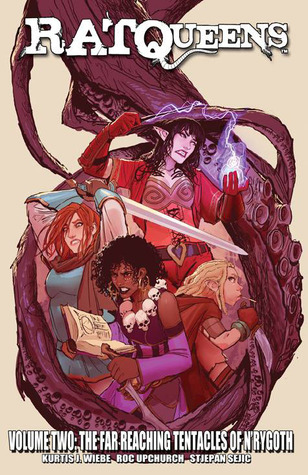
A great continuation of a fabulous series, with all the wit, charm, sass and expletive-ridden action of the first volume. In Volume 2, the eponymous Queens are drawn further into the nefarious plot to destroy Palisade and the reader gets drawn further into their messy and complicated lives. We get a little more backstory about each of the characters (apart from Betty who is sadly underused for most of this volume), as well as the development of their relationships both with each other and with the more incidental characters around them.

All of which is great, apart from that there is a LOT of plot going on in this second volume, which can get a little confusing at times. I’m still not entirely sure if I understand what happened to Dee at the end for example, or what’s going on with Hannah and her history and I’m hoping the answers to these questions, along with the others raised, will be answered in Volume 3.


This is however a very minor niggle in an otherwise excellent comic and I’m really looking forward to the next volume of this irreverent and anarchic series. If you haven’t read it already then what are you waiting for – go order Volume On already!

So, that was my reading for the month of April. As always, I'd love to hear your thoughts on any of the books mentioned - have you read them? Are you adding them to your TBR? And do you have any recommendations for future books for me? You can either drop me a comment down below or find me on Twitter @amyinstaffs. So, until the next time...

Happy Reading! x