Monday, 20 July 2015

The Inevitable 'Go Set A Watchman' Post


Go Set a WatchmanUnless you've been living down a well for the last few months, you should be aware that Harper Lee's second novel, 'Go Set at Watchman' was published last week. I'm aware that this post will be a mere drop in the ocean of words written about Lee's latest but, as an avid reader who has just re-read 'To Kill a Mockingbird' and has eagerly anticipated 'Go Set A Watchman' since it's announcement, I wanted to share some thoughts on both books with other book-lovers and get your thoughts in return. I shall, as always, try to avoid spoiling any major plot points within the novels but, due to the nature of the discussion, there may be some minor spoilers for overarching themes in both books.

I didn't read 'To Kill A Mockingbird' until I was in my late teens so, for me at least, it's never been the life-defining novel that it is for a lot of readers who encounter it at school. I remember thinking that the book was very good and I enjoyed reading it but, as an examination of race relations I think I got more from Andrea Levy's 'Small Island' and Maya Angelou's 'I Know Why the Caged Bird Sings'. In 'Mockingbird', the trail of Tom Robinson is almost incidental to start with - background scenery to the life of the young Scout Finch and to the everyday battles of school and home life that she has to contend with - and I remember being somewhat bemused as to why I was reading about a young girl's summertime adventures in a book so well-known for it's powerful anti-segregation message. 
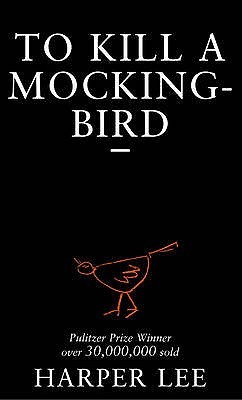
To Kill a MockingbirdRe-reading 'Mockingbird' a few weeks ago, I realised that my teenage self had missed many of the subtleties within the book - the small asides and gently taught life-lessons that build up to give the novel it's powerful message. By narrowing the field of vision to that of a young girl, Lee is able to portray the complex undercurrents and unspoken truths of small town Southern life in a seemingly simple and innocent way. In 'Mockingbird', Lee shows the reader her message rather than telling it - it's not a matter of the reader being told 'racism is bad' but instead one of readers being invited to compare the actions of Atticus, Scout and Jem against those of Bob Ewell and to make their own decisions about the merits of each viewpoint. 

Having finally come to appreciate the full power of 'To Kill A Mockingbird', I was somewhat apprehensive about 'Go Set A Watchman'. Whilst it's publication wasn't about to destroy my childhood, I'd hate to see a novel so powerfully respected as 'Mockingbird' be diminished in any way by its association to a new work. I need not have worried however - I read 'Watchman' in four days flat and enjoyed it thoroughly. That said, whilst it may be set in the same town, with some of the same characters and is told by the adult Scout (now 'Jean Louise') Finch, I do not personally consider 'Watchman' to be a sequel to 'Mockingbird', despite a number of reviews calling it such. Instead, I prefer to think of it as a companion novel - 'Mockingbird' as it might have been if things had turned out a little different.

The themes of 'Watchman' are less subtle and refined - certainly the issue of race and identity is much more prominent from the off, with Jean Louise returning home to Maycomb in the mid-1950s to find that the town and it's citizens are being torn apart by the undercurrents of racial tension that have bubbled to the surface following recent race riots in other parts of the state. The sense of dislocation that Jean Louise feels upon discovering that her family, friends and neighbours are apparently so changed is key part of the novel and her coming to terms with the banishment of childhood ideals is a major part of her development as a character throughout. I really identified with this aspect of 'Watchman' and I think Lee does an excellent job of capturing the conflict that young people undergo when they return to an idealised home only to find it not as perfect as they remembered. 

To me, 'Go Set A Watchman' is a novel more obviously concerned with race but less sure how to settle the issues it raises. The ending, which I will not spoil, feels somewhat unsatisfactory as Jean Louise is encouraged to settle for a compromise which ignores many of the issues at hand. 'To Kill A Mockingbird' leaves readers with a sense of satisfaction - Tom Robinson may not get justice but Scout and Jem - and, by proxy, the reader - have been left with a powerful sense of it, whereas 'Go Set A Watchman' leaves as many questions as it answers and with no real sense of conclusion. I'm not saying that this makes it a bad novel but it does make it a more difficult one - some of the questions that Lee raises are deeply unsettling and her ending doesn't give readers an easy way to answer them. 

Personally, I think that both novels have their merits. There is no doubt that 'To Kill A Mockingbird' is the better novel - it is better written, more lyrical and has more of a sense of purpose in its aims and plotting and, as such, it rightly deserves to be a classic of literature - but that doesn't mean that 'Go Set A Watchman' isn't worth reading. To me 'Go Set A Watchman' is the more complicated book - the one that raises more questions and refuses to provide neat, satisfying answers. 'Go Set A Watchman' is about the end of childhood and the banishment of nostalgia and it pushes the reader out of their comfort zone and forces them to confront uncomfortable truths. Naming no names, I like that a character who is admirable in so many ways can hold abhorrent political views - it makes them infinitely more tricky to deal with than someone who is a shining beacon of goodness and encourages the reader to examine themselves in a new light. 'Go Set A Watchman' is a very timely book - in a world where racial tensions are again becoming an increasingly relevant topic, it asks questions that still don't have satisfactory answers and encourages us to become unsettled in order to be pushed into action. 

As always, I'd love to know your thoughts on 'To Kill A Mockingbird' and 'Go Set A Watchman' so leave me a comment below or tweet me @amyinstaffs. And, until next time, Happy Reading!

x

Wednesday, 8 July 2015

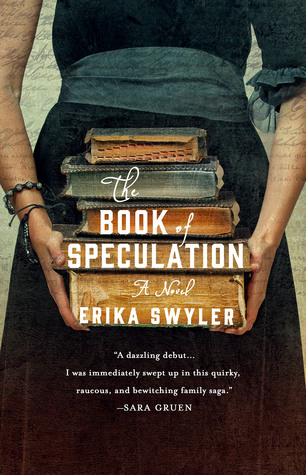
REVIEW: The Book of Speculation by Erika Swyler

The Book of SpeculationSimon Watson, a young librarian, lives in the crumbling remains of his family home on the edge of Long Island Sound. When he receives a mysterious book from an antiquarian bookseller, Simon is perplexed. Why does the book contain the name of his maternal grandmother? Why have all the women in his family died by drowning? And what does any of this have to do with the doomed romance between a mute fortune teller and a mermaid, two members of an 18th century travelling circus troupe? As his life unravels around him, Simon must unlock the secrets of the book before fate deals his family another deadly hand.

I was intrigued to read this debut novel, which has been likened to Erica Morgenstern’s ‘The Night Circus’, as it seemed to offer an intriguing blend of literary mystery and magical suspense. So I was a bit surprised that I found it quite hard going initially. Simon was a hard character to like being by turns reclusive and then, when forced into interactions with other characters, belligerent. His sister Enola, the other major character, provides a sparky alternative to Simon but again alternates her personality wildly from headstrong free spirit to petulant child. I completely get that both characters have been screwed up by their shared past and the various tragedies that haunt their family history but they were, for me, kind of hard to empathise with as a result.

I greatly preferred Amos, the main character of the secondary narrative, which takes place in a travelling circus during the 18th century. Quiet, reflective Amos, who learns to ‘speak’ via the medium of the tarot cards he deals, struggles to balance his wish for friendship with his passion for the ethereal Evangeline. Amos is mute but Swyler does an excellent job of building his relationships with his mentor, friends and lover and developing the subtle aspects of his personality in a narrative viewpoint that is largely confined to Amos’ headspace. The side-characters are also really well drawn in this books, with each of the circus folk having a definite personality. My favourites were Enola’s boyfriend, the tattooed ‘electric man’ Doyle, and Madame Ryzkhova, Amos’ fortune telling mentor, both of whom really came alive on the page.

In fact, the circus aspects were what kept me going with this novel. I quickly lost interest in some of the many subplots in this book, which vary from Simon’s on-off relationship with his neighbour’s daughter to his efforts to find a job and to preserve his crumbling family home. At times, there definitely felt like there was too much going on – as if Swyler wanted to delay the solving of the central mystery by throwing yet another obstacle into her characters’ lives. However, the central narrative about Simon and Enola’s family history, and its connections to the circus, is absolutely fascinating and did pull me through the slower sections of the book. Swyler has clearly done her research into circus life and, especially, into the specialisations of breath-holders and tarot readers and the allure of both these arts is deftly conveyed.


All in all, I did find that this was a book worth sticking with – I greatly preferred the second half to the first, with the story improving as it gathers pace and the central characters becoming more sympathetic as they develop and their secrets are revealed. I can definitely see the comparisons with ‘The Night Circus’, although I feel that ‘The Book of Speculation’ errs more on the realist side of magical-realism. That said, fans of Morgenstern’s novel will find plenty to like if they take a gamble on Swyler’s debut, as will readers who want a deep historical mystery with a touch of romance and are prepared to stick with the narrative through the slightly boggier sections. 

The Book of Speculation by Erika Swyler is available in hardback now from all good bookstores. Thanks go to the publishers, St Martin's Press, provided me with a free galley copy of this novel via Netgalley in return for an unbiased and honest review. 

Sunday, 5 July 2015

June Wrap Up Part 2

As promised, here are the rest of the books I read in June to complete my wrap up for the month. Having had my weeks holiday, my reading naturally slowed down a little when I went back to work however I still managed another three books to round the month off.

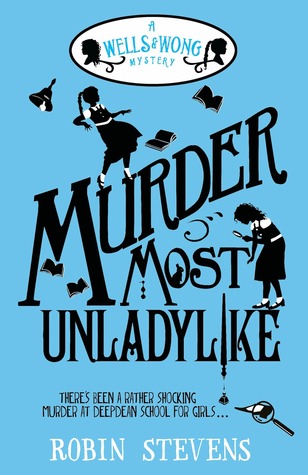
Murder Most Unladylike (Wells and Wong, #1)Murder Most Unladylike by Robin Stevens

Having toiled through ‘The Turn of the Screw’, I was desperate for a little light relief. Fortunately, my real life book club choice for June provided this in spades. ‘Murder Most Unladylike’ is the first in a series of YA mysteries set in and around an English girls’ boarding school in the 1930s. Think Malory Towers meets Nancy Drew but with extra bun breaks and squashed fly biscuits.

Sparky schoolgirls Daisy Wells and Hazel Wong have established their own detective agency at Deepdean School. Having successfully solved the case of Lavina’s missing tie, they are ready for a new challenge. So when Hazel stumbles across the body of the Science Mistress, Miss Bell, in the gymnasium, the girls are determined to get to the bottom of the crime before the killer strikes again.

This was a really fun, enjoyable read suitable for young adults from aged 9 upwards. Although set in the 1930s, the series is a modern publication so the writing style is more contemporary than the classic Malory Towers adventures. The period detail is a real delight and there were elements that were pure Agatha Christie. Add in the likeable schoolgirl heroines, the well-plotted mystery and a dash of modern day wit and you’ve got an excellent package! I’ve already got the next in the series, ‘Arsenic for Tea’, on my TBR!
The Year of Reading Dangerously: How Fifty Great Books (and Two Not-So-Great Ones) Saved My Life 

Books about books are one of my favourite things. At some point, I must do a top 5 because there’s so many of them. This would probably be included, a witty account of writer and editor Andy Miller’s conquering of ‘The List of Betterment’, a list of 50 books that he has claimed to have read but never actually has.

We all have our own ‘Lists of Betterment’ I feel. Books we’ve said we have read. Books we feel we should read. The ‘classics’ of English Literature. My own includes Anna Karenina, Vanity Fair and most of the novels of Charles Dickens (to date, I have only managed to finish ‘A Christmas Carol’ and then only because my mum bought me an absolutely gorgeous illustrated edition from Candlewick Press – apparently I can read Dickens only with the aid of pictures). 

Andy Miller’s is a varied list, ranging from ‘The Master and Margherita’ to ‘Middlemarch’ via ‘The Ragged Trouser Philanthropists’ and ‘Beloved’. In finally reading them, he conquers the excuses we all make for not reading – not enough time, too many commitments, too tired following a long week at work – and re-evaluates the importance of books and reading in his own life, coming to some startling conclusions and decisions. Part memoir, part celebration of literature, this is a warm, humorous examination of one man’s odyssey through books. An excellent read for book lovers of all varieties.

The BeesThe Bees by Laline Paull

One of my summer reading goals for 2015 is to read the six books that comprise the Baileys Prize shortlist. For those of you that don’t know, the Baileys Women's Prize for Fiction is a British book award which celebrates the best fiction written by female authors. It’s probably my favourite of the literary prizes – partly because I completely agree with its aims and sentiment and partly because it has a knack for picking bloody good books. The 2015 shortlist is a case in point, featuring 6 excellent titles that I am really looking forward to reading.

I chose to start with ‘The Bees’ because I’d heard so much about it. Simon Savidge of Savidge Reads had raved about it. A bookseller in Waterstones Sheffield was in raptures over it when I mentioned it at the till. Everyone I met who had read it, loved it. So, despite it not sounding like my usual cup of tea, I started this one first.


The novel follows Flora 717, a lowly sanitation bee, as she rises through the hierarchical society of her hive. It takes a bit of getting used to reading from the perspective of a bee – the description is much more focused on the senses of touch and smell that on sight for example – but the Paull’s vision of hive society is fascinating with touches of ‘The Handmaid’s Tale’ interwoven throughout. Paull never preaches but I learned so much about bees and the way in which they live as her knowledge is woven throughout Flora’s tale of drama, tension and religious fervour. Although it took a bit of getting into, I really enjoyed this book and would urge others to try it – even if science fiction isn’t usually your cup of tea, ‘The Bees’ offers a unique perspective on a threatened world. 

Phew! That, finally, was June's reading - what a busy month! One I thoroughly enjoyed though as I really committed to some quality reading time and read some really good books as a result. July is shaping up to be similarly bookish. I've just finished the second on my Baileys Prize book list - Sarah Waters' 'The Paying Guests' - which I raced through, despite it being nearly 600 pages long. I'm currently finishing up 'The Book of Speculation', which I plan to review on here and am also putting together a list for a book tag challenge. So hopefully there will be plenty of bookish content going live on the blog over the coming weeks!

So, until next time folks, Happy Reading!

x

Sunday, 28 June 2015

June Wrap Up Part 1

Wow, June has been a busy bookish month! I kicked the month off with a week's holiday, during which time I went to Cornwall and (amongst other things) met the lovely Marie Phillips, author of 'Gods Behaving Badly' and 'The Table of Less Valued Knights', a review of which will be forthcoming shortly, along with a short interview with Marie. Then, at the end of the month we had Independent Book Week which, of course, necessitated a visit to the excellent Booka Bookshop and a lovely haul of books. I also got oodles of reading done - mainly during my holiday week - hence why this is the first of two wrap up posts - I thought the post might get a bit long if I put all of my books into one wrap up this month. So, I'll post one wrap up this weekend and another next weekend and maybe a cheeky review in the middle of the week if I have the time and energy after finishing work! So without further ado, here are some of the books I read in June...

The Vagenda: A Zero Tolerance Guide to the MediaThe Vagenda: A Zero Tolerance Guide to Women and the Media by Holly Baxter & Rhiannon Lucy Cosslett

More than just another feminist manifesto to emerge in the wake of Caitlin Moran’s ‘How to Be A Woman’, this is a timely look at women in the media and a scathing examination of the women’s magazine market, journalistic standards and lad culture.

Based on the successful blog of the same name ‘The Vagenda’ (a portmanteau term gleaned from a magazine and being an amalgamation of ‘vagina’ and ‘agenda’ – yes, seriously) exposes the silly, manipulative and often damaging ulterior motives behind some of our best loved magazine’s headlines and features. Examining everything from the babyfication of female language (because nothing, absolutely nothing, should ever be described as "totes amazeballs") to the control that magazine try and exert over every aspect of their readers’ lives (are YOU wearing the right shade of nail varnish this season?) in order to sell advertising space, this witty and insightful book is a call to arms for the modern woman.

When I wasn’t laughing out loud at the writers’ outrageous humour and acerbic wit, I was raging at the idiocy of ad men and the worrying ignorance displayed in some portions of the media. An excellent book which deserves to be read by men and women alike and has completely altered my perception of media culture. I may never buy a women’s magazine again!
Levels of Life 
Levels of Life by Julian Barnes

You put together two things that have not been put together before. And the world is changed…

So begins Julian Barnes’ startlingly honest and insightful non-fiction/memoir which gives us, firstly, the life of the ballooning pioneer Nadar and his forays into aerial photography then moves on to tell the story of Colonel Fred Burnaby, reluctant admirer of the extravagant and enigmatic Sarah Bernhardt before, finally, telling us the unflinching truth of his own grief following the death of his beloved wife.

At only 128 pages, this is a slim book but it packs an emotional punch. The blend of early ballooning history and raw, unfiltered grief could sit uneasily in lesser hands but Barnes deftly weaves connections between his three sections and the insight of the final part would not, I feel, be as powerful had I not read the earlier chapters. A profoundly honest memoir which lingers long after you have finished reading the final page.


I was recently introduced to the gorgeous Penguin English Library – a recently revised and re-issued collection of 100 classic English novels and novellas with beautifully designed paperback editions that have striking covers and bright, striped spines. I feel the beginning of a collection coming on but, instead of buying a new edition of an old favourite, I decided to start with something new. As a lover of ghost stories, I’ve heard of ‘The Turn of the Screw’ but was always put off reading it by James’ reputation for dense prose. However, upon seeing that the novella, bundled together in this edition with James’ other famous short work ‘Daisy Miller’, made up part of the Penguin English Library, I decided to bite the bullet and picked up a copy.

I started with ‘Daisy Miller’, ostensibly a story about a young American girl holidaying in Europe. Under the surface however, this is a cutting examination of social attitudes and the damaging effect that they can have upon youthful naivety. At only 4 chapters long, James packs a lot into a short space and his writing is sharply observed. The ending is ambiguous, leaving the reader to decide for themselves how they feel about Daisy’s character and conduct and I felt that James was inviting interesting comment and debate upon the social attitudes of his time. Given that I’d never heard of ‘Daisy Miller’ before, I was rather surprised by this one – an enjoyable and stimulating read.


‘The Turn of the Screw’ is an altogether different affair and, I have to say, somewhat of a disappointment. Having been pleasantly surprised by ‘Daisy Miller’, I was looking forward to reading this celebrated ghost story. And indeed, the twists and turns of the plot – which focuses on a young governess who starts to believe her two young charges might be being influenced by malevolent supernatural forces – are well-handled and there are some genuinely chilling moments. But to get to these there is just so much extraneous writing! Characters have countless conversations that seem to serve no purpose and laboured description of everyday activities abounds. The central premise, which touches on issues of mental stability as well as Victorian attitudes towards female sexuality, is interesting but sadly I found this to be rather long-winded, albeit a quick read. Read Wilkie Collins’ ‘The Woman in White’ instead – it’s longer but just as chilling and far more satisfying. 

The three books above (well, four if you count 'Daisy Miller' and 'The Turn of the Screw' as two separate books) made up the majority of my holiday reading whilst I was in Cornwall. I'd love to know your thoughts if you've read any of them - or are planning to read them - so post me a comment below or tweet me @amyinstaffs. I'll post the rest of the month's reading next week but, until then, and as always...

Happy Reading!

x

Monday, 22 June 2015

The Joy of Bookshops (#IBW2015)

IBW_Web_banner_2015-01

I love a good bookshop. To me there are few pleasures comparable to browsing shelves filled with rows of books, hundreds of possible adventures waiting within their pages. And if that sounds a bit corny and romantic, it's meant to. Bookshops are romantic and, to a book lover, they have perpetual allure. Put me in a city or town and, soon enough, I'll find my way to a bookshop. If said bookshop happens to also serve tea and cake, that's the rest of the afternoon sorted right there. A good bookshop is like a little bit of heaven on earth and it's time we showed them some love. 

In the age of the internet, where the likes of Amazon and Book Depository lure consumers with their cheap deals; and of supermarket book sections, which can use their buying power to undercut high-street bookshops on the biggest-selling titles; the dedicated bookshop can seem like a dying breed. Yet in spite of the problems of increasing competition, the rise of e-books and increasing high street rents, many excellent independent bookshops are thriving.

Take the excellent Booka Bookshop & Cafe in Oswestry, Shropshire. Booka, which opened in 2009 and has been going from strength to strength ever since, is a wonderful bookshop. The large picture windows are always decorated with enticing displays and information about upcoming events. Inside, the shop is light and airy with cosy cushioned benches, chic cafe tables and piles and piles of books all nestled on white painted shelves. There's always a display table of staff picks - one of my favourite things as booksellers can always be relied upon to make excellent recommendations - and of recently released titles, many of which are often signed as Booka run regular author signings and events. So although it's over an hour away, I find reasons to visit Booka as often as possible. 

I had an excellent excuse to visit Booka on the weekend just gone as it was the start of Independent Bookshop Week (IBW), which runs from 20 - 27 June 2015 and aims to celebrate indie bookshops throughout the UK. This year, in addition to the readings and events organised by the bookshops themselves, the organisers are encouraging people to pop to their local indie bookshop and #giveabook- buy a book for someone special in you life. 

For my #giveabook, I wanted to get a birthday present to send to my cousin Jay in Japan and was also after a Fathers Day gift. Booka duly provided the goods on both counts. I won't disclose the birthday gift lest the recipient read this post (it's not his birthday until the end of the month!) however I found a beautiful Candlestick Press poetry pamphlet for my Dad featuring collected poems from Wales, a country of which we are both very fond. I also picked up a copy of Angela Readman's Costa Short Story Award winning collection 'Don't Try This At Home' for myself - IBW2015 might be about #giveabook but it's not going to stop me adding to my own collection!

Independent Book Week is also running the second IBW bookshop crawl this coming Saturday (27 June) which encourages book lovers to take a road trip of local indies and to blog, tweet or post about it during the day. Sadly my work rota prevents me from taking part in the #bookshopcrawl but I am hoping to finally pay another visit to wonderful local independent, The Book Barge which is (usually) moored in Barton-Under Needwood, Staffordshire, at some point next weekend. Yes, that's right, it's a bookshop on a canal boat. And it has a resident bookshop rabbit. Do I need to say any more or shall we just say The Book Barge is cool and leave it at that!? 

So get out there this week and show your local indies some love. Whether you simply pop in on your lunch break or make an afternoon of it and have some tea and cake whilst you're there, find your local independent bookshop and go enjoy it. Browse the shelves, chat to the booksellers, bask in the quiet companionship of fellow book lovers. And then get involved in the conversation and tell everyone else all about it! You can follow  the organisers of IBW2015 on Twitter @booksaremybag and @IndieBound_UK and can tweet using the hashtags #giveabook #IBW2015 and #bookshopcrawl throughout the week. As always, I'd love to hear about your adventures with books so tweet me @amyinstaffs to tell me about your favourite bookshops and your #giveabook choices.

Until next time folks, Happy Reading! 

x

Tuesday, 9 June 2015

May Wrap Up

Firstly, apologies. I am aware that this Wrap Up is a tad later than usual. I offer no excuses other than that I was off gallivanting in sunny Cornwall for a few days in an extremely beautiful area, albeit one with a somewhat medieval provision of mobile phone and WiFi reception. Being in one of the UK's so called 'not spots' has been extremely beneficial for my reading however so June has got off to a flying start without the usual distractions of Facebook, Twitter and YouTube. 

Whilst in Cornwall, I also had the pleasure of meeting Marie Phillips, author of the bestselling 'Gods Behaving Badly', to talk about her latest book 'The Table of Less Valued Knights', a light-hearted (and extremely funny) take on some of the mythology surrounding King Arthur. I hope to be able to being you a short Q & A with Marie and a review of her latest book very soon. 

For now though, back to the round up of May's reading. I have already posted full reviews of Rowan Coleman's 'We Are All Made of Stars' and Laura Barnett's 'The Versions of Us', both of which I read this month, so I'll leave them out of my wrap up and you can follow the links to my full reviews should you so wish. A note on formatting also before I begin - rather than put a Goodreads link at the end of each review, I'm going to start linking to Goodreads from the book title to tidy the blog up a bit so just click the title if you want to find out more about each book I mention! 

The Sunrise
The Sunrise by Victoria Hislop

I received a NetGalley proof of this from publishers Headline in advance of the UK paperback release this month. Having read and enjoyed Victoria's debut 'The Island', I was really looking forward to this, her latest novel. Beginning in the summer of 1972, 'The Sunrise' tells the story of the inhabitants of the thriving holiday resort of Famagusta in Cyprus. The latest jewel in Famagusta's crown is The Sunrise, a luxurious hotel recently opened by entrepreneur Savvas Papacosta and his wife Aphroditi. But beneath the glittering facade of the hotel's opening, tensions are running high. Simmering political unrest has seen old battles between Turkish and Greek Cypriots re-ignite and, when these erupt into violence, the staff of the The Sunrise will be caught in the centre of world-changing events. 

'The Sunrise' is clearly an extremely well-researched novel and I was fascinated to discover more about this turbulent period in Cyprus' history and the events leading up to the separation of the island. Unfortunately I just didn't click with some elements of the novel and found the book a struggle as a result. Because there is just so much history to be fitted in, the plot takes a while to really develop and, as a result, you're relying on the characters to keep you interested early on. Sadly,I found the main characters - Savvas, Aphroditi and The Sunrise's manager Markos - to be lacking in depth. Their motivations seemed simplistic and they each had one or two over-riding characteristics that dominated their personalities to the extent of making them quite unpleasant at times. There are also a LOT of characters in this novel - and a number of narrative viewpoints - so it was hard to keep track of who's who and to have a great affinity with any one person or perspective. 

The book definitely picks up about the halfway mark, becoming much more pacy following the coup of 1974, which sees the characters scatter as their comfortable lives get drawn into the chaos of war. And, as with her earlier novels, Hislop has a wonderful sense of place. From her descriptions of cocktails on the hotel terrace at sunset, through her realisation of the the war torn streets of Famagusta, I could always envisage exactly where the action was taking place. 

Overall, this wasn't my favourite of Hislop's novels and I do think it's someway off her best in terms of plotting and characterisation. It wouldn't put me off reading more of her work however and I'm sure it will be a book that a lot of people will take to their sun loungers this summer. 

The Darkest Part of the Forest
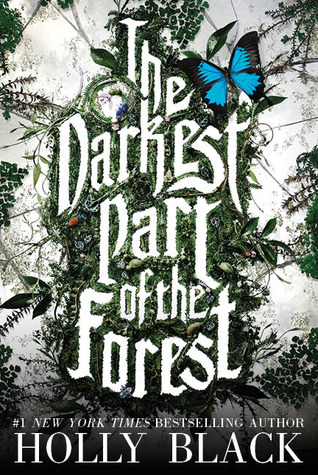
The Darkest Part of the Forest by Holly Black 

I read this YA fantasy having seen it crop up on numerous blogs and vlogs. The cover looked great and the premise - a teenage brother and sister  accidentally wake up a fairy prince who's been asleep in a glass coffin outside their town for a few hundred years - sounded ideal for someone raised on myths and fairytales. And, indeed, this is a dark, creepy romp which plays with a number of fairytale tropes and integrates them with modern youth culture. It is clear that Holly Black knows a lot about myth and fairytales and I really enjoyed her interpretation of the fae - who has more in common with the dark tales of The Brothers Grimm than with modern day fairies - and her switching of gender roles, with Hazel becoming the knight and her brother Ben playing more of a support role. 

Unfortunately I found parts of the narrative really chaotic - there's a lot going on for a relatively slender book - and, as a result, I felt that there were a number of loose ends left unresolved. For example, much is made at the beginning of the book about the fact that Hazel likes kissing boys and breaking hearts and I thought this would develop into something. But it never does. Unless this is supposed to illustrate that Hazel is a normal teenage girl, I'm not sure why the author spends so much time telling us about this aspect of her character. This becomes really frustrating over time as so many of the elements which feel rushed have so much potential - I was itching to know more and ended up feeling unfulfilled. Sadly 'The Darkest Part of the Forest' didn't really do it for me but I am going to try another of Holly Black's books - 'The Coldest Girl in Coldtown' - because I enjoyed her style and she's clearly an author with a lot of talent.

Mrs Pargeter's Principle (Mrs Pargeter, #7)Mrs Pargeter's Principle by Simon Brett

I love a good cosy crime mystery series and the 'Mrs Pargeter' series by Simon Brett is one of my favourites. Mrs P is the widow of the late, great Mr Pargeter - a legend of the criminal underworld who did an excellent job of ensuring that his loving wife knew no more than she had to about his less than legal activities. As a result, he has left her amply provided for both in terms of money and contacts - Mr Pargeter's 'Little Black Book' being an invaluable source of former associates now running useful legitimate businesses. So when Mrs Pargeter discovers that one of her late husband's contacts - Sir Normington Winthrop - has passed away, she feels duty bound to attend his funeral and pay her respects. But why do none of Mr Pargeter's other associates know of Sir Normington? Why is Mrs Pargeter not allowed to contact his widow? And what does any of this have to do with gun-running in the Congo and the rise of a right-wing political organisation? 

As with all of Simon Brett's books, this is an easy to read, cosy mystery. Previous readers of the 'Mrs Pargeter' series will be delighted with the return of the character and all of the series favourites are present and correct, alongside a few new faces. It's not a deep read and the plot isn't really the point but, if you want a light hearted crime novel with characters that will quickly feel like old friends and a touch of humour then you can't go wrong with Simon Brett. This is the seventh Mrs Pargeter novel and, whilst it can be read as a standalone, I'd recommend starting with the first book 'A Nice Class of Corpse' to get the most from the series. For fans of cosy crime, I can also recommend Brett's 'Feathering Mysteries' series, beginning with 'The Body On The Beach'. 

So that was May - rather a mixed bag in terms of subject matter and responses but another good reading month. As mentioned earlier, June has started well with a couple of books read already. And as I'm off for the remainder of the week, I'm hoping to have made a good dent into my TBR before going back to work, starting with the Bailey's shortlisted 'The Bees' by Laline Paull. It was an excellent Baileys shortlist this year so I'm hoping to read all six titles over the coming months. I've also been recommended Kirsty Logan's debut novel 'The Gracekeepers'  by several people - including my best friend - so I want to start that too. As always, I would be interested in hearing what you've been reading in May, as well as your thoughts on any of the books reviewed above. You can leave me a comment down below or tweet me @amyinstaffs with your thoughts. 

Until next time folks, Happy Reading!

x

Monday, 1 June 2015

The 'Be A Good Human' Book Tag

I follow the lovely Jen Campbell via both her blog, This Is Not The Six Word Novel and on YouTube where she regularly posts well-presented, interesting BookTube videos which can dangerously expand a TBR pile. In response to a recent bout of stupidity and ignorance on the part of a fellow human being, Jen created the 'Be A Good Human' book tag, which is a tag to discuss books which promote diversity and understanding. You can (and should!) watch Jen's original video here for more about the tag and how it came to be. I think this is a fantastic book tag because books are so good for spreading the love and really encouraging you to see the world with different eyes. So I thought that I would join in and discuss some of my favourite books that, I feel, encourage you to Be A Good Human. Which is something we all want to endeavor to be, right?

23363874Reasons To Stay Alive by Matt Haig

I reviewed this in full a couple of months ago (you can read the full review here) but wanted to mention it again here because I genuinely do believe that it is one of the most profound and honest discussions about mental illness that I have read. It's also a life-affirming read which makes you appreciate the small things, teaches you to take the rough with the smooth and celebrates the essential individual differences which make us all human. I have also heard very good things about Matt's novel 'The Humans' which is on my TBR and sounds like a novel which espouses the same messages about tolerance and understanding as this memoir. 

http://www.goodreads.com/book/show/23363874-reasons-to-stay-alive?from_search=true

https://www.goodreads.com/book/show/16130537-the-humans

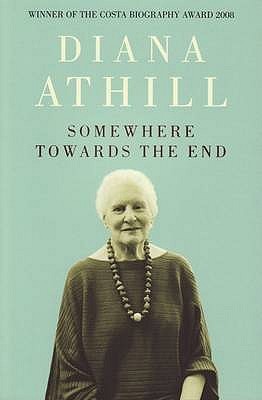
Somewhere Towards The End by Diana Athill
Somewhere Towards The End
I read this some years ago but have never forgotten it - always a sign that a book has said something important to you. In this candid memoir, editor and writer Diana Athill discusses aging - what it means to grow old, how to come to terms with the life you have lived, and the inevitability of death. Diana never shies away from the difficult questions, discussing everything from the increasing pleasures of gardening to the gradual ebbing away of her sex drive, with grace, humor and wit. In an aging society we need to listen to older voices - not easy in a media climate that increasingly values youth - and I found it extremely refreshing to read a book which focuses on the everyday challenges of growing old. Having read this, I'm less scared of aging myself - Diana is a case in point that life really doesn't stop when you start drawing your pension - and more aware of the rich inner life that continues well into old age. 

https://www.goodreads.com/book/show/6082753-somewhere-towards-the-end

How To Be A Woman by Caitlin Moran


How to Be a WomanUnless you've been living on Mars for the last couple of years, you'll probably have heard of Caitlin Moran - writer, journalist, The Times columnist and figurehead for the fourth wave of feminism. Her memoir, 'How to Be A Woman', is a manifesto for feminism in the modern age covering everything from the trials of puberty and periods (in chapters hilariously titled 'I Start Bleeding!' and 'I Don't Know What To Call My Breasts!') to issues such as abortion, female role models and sexism in the workplace. It is also a side-splittingly funny book about being a woman in the twenty-first century. Unlike some feminist tomes, Moran celebrates both men and women; encouraging everyone to be care about female roles and rights whether regardless of whether they happen to possess a womb. It should be required reading for  all teenagers - boys and girls - and I would highly recommend it to everybody else. I wish it had been around when I was a teenage girl because it answers so many questions, reassures on so many issues and promises hope for the future. 

https://www.goodreads.com/book/show/10600242-how-to-be-a-woman?from_search=true&search_version=service

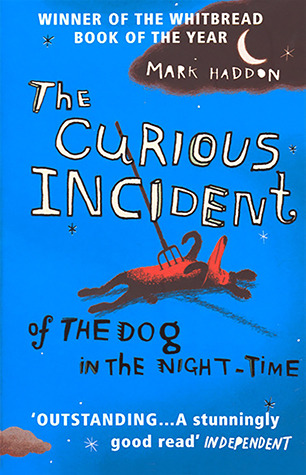
The Curious Incident of the Dog in the Night-Time by Mark Haddon

The Curious Incident of the Dog in the Night-Time
A wonderful crossover YA/adult novel that follows 15 year old Christopher John Francis Boone as he investigates how his neighbor's dog Wellington ended up dead in his back garden. Christopher is gifted with a supremely logical brain - he knows every prime number up to 7,057 and all of the countries of the world - but he struggles with human emotions and does not like to be touched. His life follows a set of carefully constructed routines and patterns, all of which are thrown into confusion by Wellington's death. I found this a fascinating portrayal of person who sees world around him entirely literally - and therefore very differently from most other people. I know other books have used protagonists with Aspergers Syndrome or Autism but what I like about 'The Curious Incident' is the fact that Christopher is never defined as having a disability or special needs. Instead the reader is drawn into Christopher's head, allowing them to follow his logic and his deductions and see the world through his unique eyes. It's a wonderful book for letting you walk a mile in someone else's shoes and an insight into different thought patterns and perceptions of the world around us.

https://www.goodreads.com/book/show/1618.The_Curious_Incident_of_the_Dog_in_the_Night_Time?ac=1

The Green Mile by Stephen King


The Green MileA sensitive and moving novel which looks at issues of race and disability discrimination in Depression era America. In Cold Mountain Penitentiary, Paul Edgecombe heads up the guards on the Green Mile, the lonely stretch of cells used to house prisoners awaiting execution. From the psychopathic to the tortured, Edgecombe and his colleagues have seen most forms of human depravity but they've never encountered anyone quite like new prisoner John Coffrey, a seemingly gentle giant who has been sentenced to death for the rape and murder of two young girls. Is Coffrey the devil in disguise that he's made out to be? Or does he hold powers of a different kind that have been deeply and disturbingly misunderstood? This is an insightful novel that reminded me of times of Harper Lee's 'To Kill a Mockingbird' - Edgecombe is a hero who owes much to Atticus Finch and his sense of honor, justice and duty is one of the driving forces of the novel. In his quest to understand what has led Coffrey to the Green Mile, Edgecombe begins to encounter the grim realities of segregation and to realise that the scales of justice can sometimes be uncomfortably weighted. Don't dismiss this as horror because of the writer - this is a powerful, moving and insightful look at humanity and the human condition. 

https://www.goodreads.com/book/show/4599610-the-green-mile

Those are just a few of the books that I feel made me a better person as a result of reading them and that, I think, make the world a better place by having been written. As always, I'd love to know if you've read any of my choices or if you have your own recommendations for the 'Be A Good Human' tag so please leave me a comment or find me on Twitter @amyinstaffs. I'll be back soon with my May Wrap Up, and also with a review of the new Victoria Hislop novel 'The Sunrise' but, until next time...

Happy Reading!

x