Sunday, 11 September 2016

August In Review

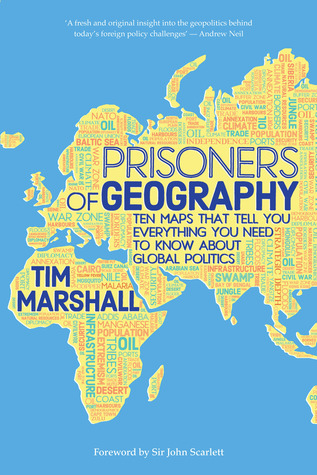
Prisoners of Geography: Ten Maps That Tell You Everything You Need to Know About Global PoliticsAugust has been a really lovely bookish month, with plenty of reading and a nice mixture of bookish events and exciting acquisitions.It's not done the TBR pile any good whatsoever however and I remain convinced that the books underneath my bed are breeding.
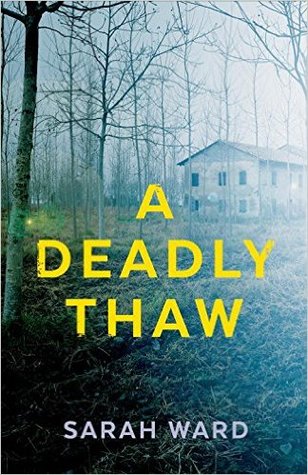
A Deadly ThawThe month kicked off with a very chilled long weekend away. Curled up in a caravan on the West Wales coast, I had plenty of time to chill out, drink wine and read books. Because of the glorious weather I didn't spend quite as much time curled up indoors with a book as I'd intended but I still managed a respectable two books in four days, polishing off Sarah Ward's excellent crime novel 'A Deadly Thaw' (which I reviewed as part of her blog tour earlier this week) as well as the fascinating 'Prisoners of Geography' by Tim Marshall. 'Prisoners' was a random pick, chosen because it had a map on the cover (I love maps and am a sucker for a good map in a book) and was the Waterstones non-fiction book choice for August. However it proved to be a really excellent introduction to political geography and, as a result, I finally have a basic understanding of why Britain insists on retaining the Falkland Islands (apparently it's not just for strategic sheep purposes), why no one wants to tango with the problems on the Korean Peninsula and just why India and Pakistan don't see eye to eye! More experienced readers might find the book a little light but, for a lay reader like myself, I thought it perfectly balanced knowledge with readability and humour. 

The Little Red ChairsMy book club pick of the month was Edna O'Brien's 'The Little Red Chairs', which I had been looking forward to having never read an O'Brien before. The plot, which centres around a Bosnian war criminal in hiding in a small Irish coastal village and his affair with a local woman, also intrigued. Sadly, whilst O'Brien's writing style is undoubtedly accomplished, I completely failed to connect with this novel on any level at all.The plot meanders, the characters are insubstantial and I fail to see how it says anything about the Bosnian-Serb war or its aftermath. Fidelma, the 'main' character in as much as the novel has one, has little by way of personality and even less of agency. Even an (in my mind unnecessarily brutal) act of violence at the novel's mid-point fails to provoke anything by way of momentum or change - there's just nothing that provides impetus or direction for any of the characters. Intolerably dull - it would have been a DNF were it not a book club choice. 

Another Day in the Death of AmericaMuch better, although that may not be the correct choice of wording given the subject of the book, was Gary Younge's 'Another Day in the Death of America' which I was lucky enough to get a proof copy of. Due for publication at the end of September, the book is an examination of the lives of ten young people who were shot dead over a 24 hour period in November 2013. The youngest was nine; the oldest nineteen, they lived in hamlets, suburbs and inner city ghettos. None of them made national news. Over the course of interviews with their friends and families, combined with examinations of the wider issues surrounding gun control in America, Younge paints a blistering portrait of another day in a country that sees seven children and teens die daily in gun violence.  I don't want to say too much at this stage as this is definitely a book that deserves - almost demands - a full review, however it was heartbreakingly brilliant and really does deserve to be read by everyone. I would urge anyone who cares about youth and humanity to get this on their pre-order or library hold list ASAP. 
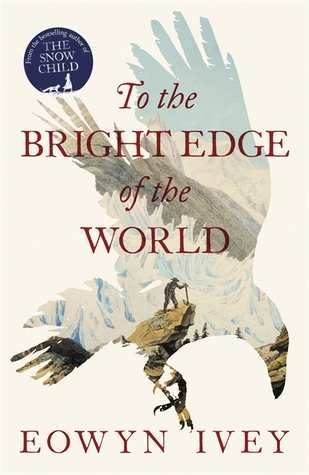
To the Bright Edge of the WorldThe end of the month saw me enjoying the delights of the wonderful Booka Bookshop and an excellent evening in the company of author Eowyn Ivey and blogger Simon Savidge as they discussed Eowyn's new novel 'To The Bright Edge of the World'. I've been able to restrain myself from starting the book as I want to savour it over my upcoming holiday in the Lake District however, based on the contents of Eowyn's talk and Q&A, it promises to be an excellent read!

The Catalyst Killing (K2, #3)I wrapped up the month by treating myself to a bit of crime, with 'The Catalyst Killing', the third in Hans Olav Lahlum's throughly enjoyable K2 & Patricia series. Once again this was a compelling and engaging mystery, this time set around the murder of a young political activist whose boyfriend vanished in mysterious circumstances some years before. Before long K2 and Patricia are drawn into a conspiracy involving young communists, old Nazis and long-buried secrets and it becomes clear that the first death may be a mere catalyst for more extreme events to follow. A great addition to a really excellent series, this is the perfect combination of Agatha Christie style plotting and Nordic noir, although I would suggest that those new to the series begin with the first book - 'The Human Flies' -and work through them in order to get the most from each one. 

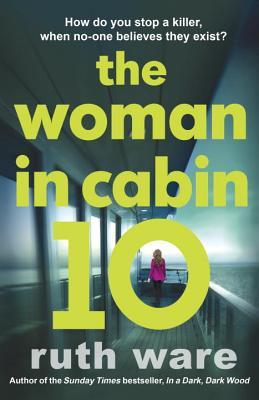
In a Dark, Dark WoodAs for current reading, I'm taking a short weekend McEwan's much vaunted novella 'Nutshell'. How I've not read 'Dark Dark Wood', a psychological thriller about a hen party that goes horribly wrong, I have absolutely no idea as it is the sort of thriller I usually devour. So far it's proving to be brilliantly twisty and I'm looking forward to diving into her second novel 'The Woman in Cabin 10' on my upcoming holiday. 'Nutshell' is a more considered read - one that requires constant attention but can be read over a relatively short span - so I've taken the weekend to really focus on it and give it the attention it deserves. As with McEwan's other novellas, it's tightly plotted, astutely observant and a little bit brilliant. I'm also meant to be reading Hannah Rothschild's 'The Improbability of Love' for book club but I bailed a few days ago to start the Ruth Ware and I fear I'm unlikely to return to it. To me it was a book that just doesn't know what it wants to be - sometimes literary, sometimes a romance, sometimes a satire. I'm just not feeling it and, with plenty of other books demanding my attention, life sometimes really is too short to read something you're not enjoying!

As always, I would love to hear your thoughts on any of these books so leave me a comment below, come say hi on Twitter @amyinstaffs or find me on Litsy @ShelfofUnreadBooks. And, until next time...

Happy Reading! x

Thursday, 8 September 2016

BLOG TOUR!! A Deadly Thaw by Sarah Ward


A Deadly ThawAs a long-time fan of the British crime novel, I thoroughly enjoyed Sarah Ward’s debut novel ‘In Bitter Chill’, which I reviewed on the blog last year alongside a Q&A with Sarah herself. Sarah’s was an exciting new voice in British crime fiction, having used her experiences as a crime reader and blogger to shape a cleverly plotted, well-realised debut that bridged the gap between psychological thriller and police procedural and provided realism without too much gore – basically, the perfect formula for the sort of crime novel I enjoy!

When I did the Q&A I was excited to learn that Sarah planned to continue her series, set in the fictional Derbyshire town of Bampton, and to bring back her trio of detectives; DCI Francis Sadler, DS Damian Palmer and DC Connie Childs for a further novel, with the possibility of extending the series beyond this. I was therefore thrilled to receive an advance copy of her second novel, ‘A Deadly Thaw’, which takes place in the early spring, following on from the events of ‘In Bitter Chill’ by a couple of months. I really like the idea of using the seasons as a way of advancing the series and, in ‘A Deadly Thaw,’ Sarah continues to ensure that the weather and the overall sense of the season adds to the overall tone and atmosphere of the novel.

‘A Deadly Thaw’ opens with the discovery of Andrew Fisher in the long abandoned Hale’s End Mortuary with a bullet through his chest. Unfortunately for DS Sadler and his team, Fisher was supposedly killed back in 2004, when his wife Lena was arrested, tried and convicted for suffocating him with a pillow. So who exactly did Lena kill and why would she lie about his identity? When Lena disappears, it’s up to the team, along with Lena’s sister Kat, to follow a trail of clues that leads back into the past but has dangerous implications for the present day.

As with ‘In Bitter Chill’, the novel is narrated in alternating chapters from the viewpoint of the police investigative team and the amateur investigation; in this case that of Kat, Lena’s sister. This works well as it allows the reader to get clues from both sides of the investigation, which heightens the tension as each strand discovers new information that isn’t always privy to the other side. It also results in a lot of cliff-hangers; which Sarah is an absolute master of – there were times I could have screamed at her for leaving off a chapter where she did!

The plot is also very cleverly weaved together, with multiple strands and plenty of red herrings thrown into the mix to distract the characters – and the reader – and keep you guessing right until the very end. It wasn’t until the closing stages that I began to get a sense of whodunit and why, which is how I like my crime books to be – there’s nothing worse than a thriller where you guess the twist halfway through! The plot is denser than in Sarah’s debut however and I have to admit to getting a little lost a couple of times – the pace is so fast that I occasionally missed key information and had to double back to check who someone was or what they’d revealed when last interviewed but, for the most part, Sarah handles the multiple story threads very well and keeps them from getting too tangled whilst maintaining the mystery and tension.

Sarah also does a great job of fleshing out her detectives, adding meat to the bones of the characters she created in ‘In Bitter Chill’, and throwing in some further complications to their personal lives – which has left me waiting with anticipation for the next book! The great thing with this series however is that you can read each novel as a standalone. ‘A Deadly Thaw’ works equally well in isolation, with the case wrapped up fully at the end of the novel and the characters fully introduced at the start for new readers. And, for those crime fans who don’t like detectives that come with more baggage than the average airport (like me!), Sarah keeps the focus on the crime and crime-solving, with the personal stories ticking away in the background and only occasionally coming to the fore.

Overall, I really enjoyed ‘A Deadly Thaw’ and it is a worthy successor to ‘In Bitter Chill’ and marks Sarah out as an author to watch on the British crime scene. The dual structure, clever central mystery and tightly woven plot gives the book real pace and dynamism making this a fast, thrilling read which ratchets up the tension without resorting to brutal violence or overt amounts of blood and gore. Definitely one for crime fans to put on their autumn TBR pile or their Christmas list - my only problem now is that I have to wait for Sarah to write book three!


‘A Deadly Thaw’, published by Faber & Faber, is available now in hardback and ebook from all good book retailers. My thanks go to the author and the publisher for providing an advance copy of the book in return for an honest and unbiased review. 


Sunday, 28 August 2016

An Evening of Bookish Delights

To the Bright Edge of the WorldIt may come as a surprise to any readers living close to bright lights and big cities but, as a denizen of a small village in middle England, it’s a relatively big deal when a local venue manages to get an author of note out into the wilds to visit. Don’t get me wrong, I’ve been fortunate enough to see a few author talks and attend the odd signing over the years but I have to admit to enviously watching the Twitter feeds of London-based bloggers who have a seemingly never-ending round of book launches and evening events to attend.

In recent years however, the glorious Booka Bookshop in Oswestry has been luring increasingly big-name authors north of Watford Gap and into the Shropshire borderlands. Already this year they’ve had Chris Cleave, Harry Parker and Lisa Owens (to name but a few) in attendance and Damon Hill, Ann Cleaves and Alexander McCall-Smith are all on the events calendar for the coming months. The problem, for me anyway, is that Booka is stretching the definition of local – whilst it’s one of the independent bookshops closest to me, it’s still a good 90-minute drive from my home which can seem a little ambitious having done a full day at the coalface on the day job. So despite being very, very tempted on more than once occasion, I’d not yet made it over to one of their events…until this week.

When I saw the announcement that Eowyn Ivey, bestselling author of the magical novel ‘The Snow Child’, was making Booka one of the stops on her UK tour to promote her second novel, ‘To The Bright Edge of the World’, I was very excited. Added to that the fact that she would be in conversation with Simon Savidge, blogger, vlogger and co-host of ‘The Readers’ (one of my favourite bookish podcasts), I decided to throw caution to the wind, ignore the fact that the event was on a school night and book a couple of tickets as a treat for myself and my mum.

Booka never disappoints (apart from the one occasion that I got to Oswestry and it was closed for a stock take – heartbroken!) and, upon arriving, we were instantly made welcome and offered a choice of wine or juice before settling in for the talk. We also got chance to sample some Alaskan Ice Wine, as an homage to Eowyn’s native country and the place in which both of her books are set. It was lovely but very sweet, reminding me of a dessert wine, with a crispness at the end that evoked a little of Alaska.
Eowyn Ivey 
The evening kicked off with Eowyn reading a passage from ‘To The Bright Edge of the World’, which follows Colonel Allen Forrester as he leads an expedition along the Wolverine River to chart its course and map a hitherto unexplored area of the Alaskan wilderness. Told through diaries, letters and other documents, the novel alternates between Allen’s adventures and the domestic dramas of his pregnant wife, Sophie, who initially resents being left behind. Eowyn has a lovely reading voice and I was immediately drawn in by the sense of character and location as she read aloud from one of Allen’s diary entries.

The conversation with Simon Savidge was equally fascinating. Having refrained from purchasing the book until the evening itself, I was pleased that the discussion stayed spoiler-free whilst still giving a real insight into the novel. Eowyn has clearly spent a great deal of time researching the book and her passion for accurately representing Alaska and its people in her work really came through. She also enjoys interweaving fact with fiction, ensuring that Alaskan culture is fully realised but freely admitting to making up the Wolverine River and the specific geography of her story to better allow for the telling of the tale.

Anyone who has read Eowyn’s spell-binding first novel, ‘The Snow Child’, will be delighted to know that she continues to blend reality with a little of the magical in this second book – although she did say that ‘To The Bright Edge of the World’ is deliberately written in a slightly different register. I felt, from the readings given on the night, that the book did seem a little more grounded that ‘The Snow Child’, which had a sense of the otherworldly all the way through. That said, I still got a sense of the wonder and mystery that comes with being a pioneer in an Alaskan wilderness and I’m really looking forward to getting stuck into the book and spending more time with both Allen and Sophie.

A further reading, this time from a section featuring Sophie, was followed by a Q&A from the audience, with questions ranging from specifics about the book to queries about writing life and the trials of getting published. Finally, the evening ended with Eowyn signing copies of her books and chatting with audience members. I also got to meet the lovely Simon Savidge and his partner Chris, along with his mum and sister who were in attendance for the evening (and primed with questions to get the Q&A rolling – good thinking Simon, it worked!) and nerd out about books for a few minutes, which was like the cherry on top of an already well-iced delicious cake of an evening.

All in all, it was definitely worth the trip to head over to Booka for the evening. I love author events but they can sometimes feel a little formal however Booka did a great job of creating a warm and friendly atmosphere and the ‘conversation’ format added to this, giving the evening the feel of a collective booky chat rather than a talk and reading. This was helped in no small part by Eowyn herself, who was absolutely delightful and answered all questions with both good humour and good grace. I can’t wait to start ‘To The Bright Edge of the World’ and hope to be back at Booka for another author evening soon!

Do you enjoy author events? Have you been to any particularly great ones? I’d love to hear off anyone who’s been to a book festival as I’ve not had the opportunity and I’d be interested to know what a larger event is like to attend. As always, drop me a comment down below, say hi on Twitter over @amyinstaffs or find me on Litsy at ShelfofUnreadBooks. And, until next time….

Happy Reading!


x 

'To The Bright Edge of the World' by Eowyn Ivey is published by Tinder Press and is available now from all good bookshops in both hardback and as an e-book. A limited number of signed copies from the Booka event can be ordered on Booka's website here.

Sunday, 21 August 2016

A Tale of Two Childhoods: Foxlowe and The Trouble with Goats & Sheep


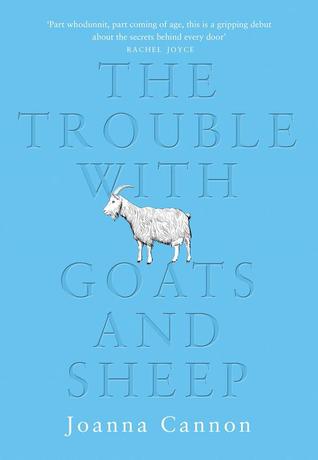
The Trouble with Goats and Sheep Child narrators can, for me at least, often be problematic in adult fiction. Too often the voice fails to convince being either too knowing or irritatingly faux-naïve. It was therefore a great pleasure to read not one, but two fabulous novels this month that featured child narrators in a convincing manner.

Joanna Cannon’s ‘The Trouble with Goats and Sheep’ has been on my TBR pile for a while. I first heard about it from Simon Savidge over at Savidge Reads because, to be honest, he couldn’t stop raving about on both his blog and on The Readers. The novel also got featured in a number of Best of 2016 lists – quite a feat for a book that was published only a few weeks into the year. And, to be fair, I did try to read it when it first came out but it was one of those cases of ‘right book, wrong time’ and I put it back on the shelf about 60 pages in. This month was, however, very much the right time to be reading ‘Goats and Sheep’, which is set in the heatwave of the summer of 1976. So one sunny day, I picked it up and started again.

‘The Trouble with Goats and Sheep’ is the story of 10-year-old Grace and her best friend Tilly. It is also the story of their parents and neighbours on The Avenue and the surrounding streets and provides a fascinating insight into insular communities from a child’s eye-view. At the start of the novel, Grace’s neighbour Mrs Creasy has gone missing, an act that causes some consternation amongst her fellow residents who are worried that she may have discovered the truth behind dark events of one winter’s night a decade before. Acting on some well-intentioned advice from the local vicar, Grace and Tilly begin a quest to find their missing neighbour and, in doing so, begin to uncover the secrets that the other residents have worked so hard to bury.

Although not told entirely from Grace’s perspective (there are switches to some of the adult characters, as well as flashbacks to 1967), it is Grace’s voice that really stood out for me within this book. Although a somewhat precocious 10-year-old, Grace was entirely authentic to me being perfectly balanced between childlike innocence and the increasing awareness of teenage years. And the old adage ‘out of the mouths of babes’ proves to ring true as Grace and Tilly confront the underlying prejudice and pettiness of their small community with an unknowing wisdom. To say more about the story would be to spoil the enjoyment of the narrative, which benefits from a creeping sense of dread as the reader comes to the realisation of what happened in 1967 well before Grace and Tilly get a true sense of events. This was however, one of my favourite reads of the year so far and an extremely impressive debut.

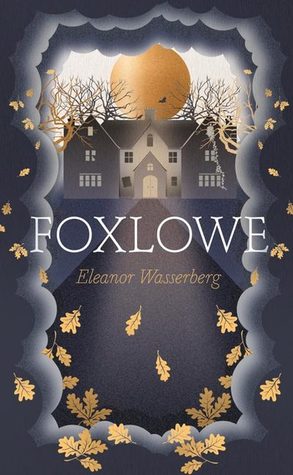
FoxloweI had a few more problems with my second book, ‘Foxlowe’ by Eleanor Wassberg, another debut and another one that I read thanks to Simon Savidge (it was his Litsy feed that did it this time – the book has to have one of the most gorgeous covers published this year). Set in a commune on the edge of the Staffordshire Moorlands, this is the story of Green, her ‘sister’ Blue and their peripatetic childhood with Founders, Richard, Freya, Libby and the rest of The Family, in the apparent idyll of Foxlowe. As with most communal idylls in novels however, it isn’t long before the reader realises that there is something rotten in the heart of Foxlowe. Green and Blue are affected by The Bad, which can only be cured by the light of the double sunset on the Solstice and which, according to Freya, is growing within them.

Once again, it was the voice that really stood out for me in ‘Foxlowe’. Alternating between Green’s childhood in Foxlowe and her teenage years when tragedy has driven her into the outside world, Green’s voice is by turns confidential, assured, insular and creepy and it does a fantastic job of conveying the dark and gothic tone of this twisted novel. Some reviewers have been irritated by the cadence of Green’s voice – the inclusion of many capitalised words and baby-like language as with The Bad, Leavers, The Family and The Founders – but I found this convincing in a child who has grown up without any form of formal education and, arguably, without any education of note at all. I also found that the use of these words, which are imbued with so much meaning for Green and her ‘siblings’ but foreign to the reader, added to the sense of the uncanny that runs throughout the book.

Whilst the narration was accomplished and erred on the right side of creepy, I did however have major issues with the plot. Without giving away major spoilers, all I will say is quite how none of the other adults realise that Freya is as mad as a box of frogs baffles me. Whilst I get that these are ‘adults’ who have deliberately chosen to walk away from the responsibilities of everyday life, the fact that they would wilfully choose to ignore child cruelty on the scale sometimes shown by Freya just didn’t wash. Whilst Freya is a truly hateful character throughout, she isn’t violent or dangerous (at least not in the beginning) and seems instead to operate through a mixture of fear, anger and spite. So how does she exert so much power and influence through the commune? And whilst I get that Freya evidently has severe mental health issues (although enough with the ‘evil’ characters having mental health problems already please! I could write a whole other blog post on that one), that alone just didn’t seem to justify her malicious hatred of Green and Blue. I read a brief but enlightening interview with Eleanor Wassberg in NewBooks Magazine in which she talked about the characters’ lack of agency due to ‘shoal’ mentality – the idea of a communal mania. And whilst this can and does happen in real life (take instances of mass suicide within cults for example), it usually has a charismatic central figure at the heart of it. For me, Freya was just not charismatic enough – I didn’t buy into the fact that all of the other characters would have bought into her hippie shtick and I think it led to an increasing disbelief with the events of the novel.

That aside however, I do think ‘Foxlowe’ is an accomplished debut and I would definitely recommend it to fans of the Victorian gothic, although I would add in a trigger warning for scenes of child abuse. Wassberg is clearly a very accomplished writer and, whilst I had issues with the plotting, I do think that the compellingly eerie quality of Green’s voice resonates with the reader long after you turn the final page. It was also nice to see my home county featured in a novel – although it is the setting for a cult so…..maybe not!

So if you’re looking for convincing young narrators, you can add both ‘The Trouble with Goats and Sheep’ and ‘Foxlowe’ to your reading lists! If you have read either book, please let me know your thoughts by dropping a comment below or over on Twitter @amyinstaffs or Litsy @ShelfofUnreadBooks. As always, I’d love to know what you’re reading or if you have any more recommendations for adult books with child narrators that you think I’d enjoy. And, as always, until the next time….


Happy Reading! x

Monday, 1 August 2016

July In Review

I cannot believe that today is the first day of August and we're over halfway through 2016 already! And although it a cliche to say it, July really has flown by - predominantly in a blur of furious activity at the day job and busy weekends with friends, neither of which have allowed for as much reading time as I would have liked. 

The Glorious HeresiesThe start of the month was, in all honesty, something of a dry period reading-wise. I bailed on 'The Glorious Heresies', which I just couldn't take to despite the accomplished writing and the many plaudits the book has been awarded since winning the 2016 Baileys Prize. And, despite having a TBR that now extends well beyond one shelf of unread books, I really struggled to pick up anything that hooked me. It was one of those intensely frustrating periods when just nothing on my shelves seemed to fit my mood. 

Time and Time AgainI did manage to finish my book club read for the month, Ben Elton's 'Time and Time Again', which was a reassuringly readable piece of speculative historical fiction that posits the interesting question 'if you could go back and change one thing in history, what would that be?' For the hero of Elton's novel, Max Stanton, the one thing is the start of the First World War and his quest to prevent the assassination of Archduke Franz Ferdinand and bring about the death of the Kaiser in order to do this makes up the bulk of the novel. Elton is a surprisingly good writer of historical fiction and clearly researches his books very thoroughly - the sections where he discusses the causes and effects of The Great War and its repercussions throughout history were my favourite parts of the novel. Unfortunately I do find that he sometimes pads his novels with unnecessary subplots, in this instance a rather pointless romance with an Irish suffragette whose progressive views seemed unbelievably enlightened even for a first wave feminist. It did make for a good book club discussion however and, for the most part, my group enjoyed the speculative elements of the plot and we had an interesting debate about what the implications of preventing the First World War could possibly be. 

The Trouble with Goats and SheepHaving finished one book, I was determined to keep reading so signed up for the #24in48 Readathon, which took place over the weekend of 23/24 August. This readathon challenges you to read for 24 hours out of 48 and, whilst I knew that work on the Saturday would prevent me reaching this goal, I thought signing up and being part of a readathon would encourage me to dedicate my downtime to books as opposed to mindlessly scrolling through Facebook. I also pulled one of my long-time TBR bench-warmers, Joanna Cannon's debut novel 'The Trouble with Goats and Sheep', off the shelf for this purpose. Set during the heatwave of 1976, the novel is a coming of age tale that follows 10 year old Grace and her friend Tillie as they go in search of their missing neighbour Margaret Creasy and uncover secrets and lies within their community. I'll be writing a full review of the book in a future post, comparing it to my other read from the latter part of this month 'Foxlowe', another coming of age tale but one that tackles the subject very differently. 

FoxloweSo although I didn't manage the #24in48 fully, the readathon weekend did get my reading back on track. The social media presence of the readathon on Twitter and Litsy really helped as I enjoyed sharing goals with other readers and the fact that there was a lot of mutual cheer-leading over the weekend. I was also helped by the fact that 'The Trouble with Goats and Sheep' was a really compelling read and I ploughed through it in a matter of days, followed by devouring 'Foxlowe' over the course of a weekend. All of which has really re-energised my reading life, allowing me to really look forward to August.

The Little Red ChairsI'm currently reading my next book club read, Edna O'Brien's 'The Little Red Chairs' - the first O'Brien I have ever read - and am narrowing down my holiday TBR for a planned weekend away later in the month. As always, I'd love to know how your reading has been going - did you have a more productive July than I managed? Have you also read 'Time and Time Again' or 'The Trouble with Goats and Sheep' and what did you think? What are your reading plans for August? Drop me a comment below or come say hi @amyinstaffs on Twitter and @ShelfofUnreadBooks on Litsy. And,until the next time...

Happy Reading! x
Sunday, 24 July 2016

Summer Reading Plans

The Trouble with Goats and SheepSummer seems to have finally decided to arrive here in the UK - and just in time for vacation season too. Following weeks of rain and 'highs' of 16 degrees, we've had an absolute heatwave with a full week (a week!) of sunshine and the mercury stretching into the upper twenties. You'd think the weather was making up for something - as if it's really sorry it's late and has decided to go that extra mile now it's here.

Being stereotypically British, all this sunshine has turned my thoughts in earnest towards summer reading plans. Whilst I am no longer fortunate (or young) enough to get the traditional six weeks summer holiday enjoyed by schoolchildren, students and their long-suffering teachers here in the UK, the summer is still a time when I like to set myself some reading goals and plan my vacation reading and there are certain books that I definitely feel have that 'summer reads' feel to them that I save for this time of year.

As mentioned in an earlier post, I am trying to complete a Books on the Nightstand Book Bingo card this summer. So far, I've marked off about five squares although alas, not five squares that line up and would give me a bingo! A lot of my 'required' reading (reviews, book club reads etc) haven't fitted my categories so far however some of the books on my summer TBR will probably fit into some squares and allow me to at least get a line bingo before the end of summer. 

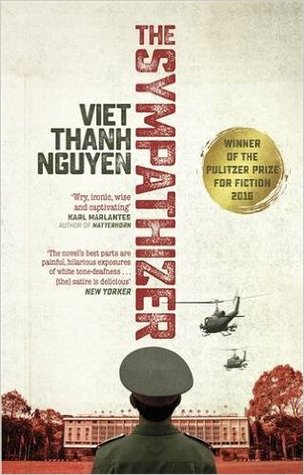
The SympathizerI also want to join in with The Readers summer group read of 'The Sympathizer' by Viet Thanh Nguyen, which is about a Vietnamese army captain with divided loyalties who ends up being a sleeper agent in America after the end of the Vietnam war. The books won the 2016 Pulitzer Prize for Fiction and it sounds like a rich and many-layered novel about a period of history I know little about. Not something I'd usually pick up for myself but I'm looking forward to hearing the podcast discussion and I think expanding your reading horizons and discovering new books is one of the major benefits of book clubs and group reads. 

I'm having a late vacation this year, with a staycation to the Lake District booked for September. However, before then the hubby and I are having a long weekend away for his birthday in August when we'll be staying in a caravan on the Welsh coast. During both 'holidays' we plan to combine getting out and about with a good deal of chilling out, drinking wine and reading books so I've started setting a few titles aside that promise to be good holiday reads. 

The Woman in Cabin 10The first of these is Ruth Ware's latest thriller The Woman in Cabin 10 about a boutique cruise that goes horribly wrong when a body is pushed overboard in the dead of night. Or was it? The passenger manifest shows no one to be missing but journalist Lo Blacklock knows what she saw and is determined to investigate. Billed as Agatha Christie with a modern twist, I'm looking forward to this one. Along similar lines, Sophie Hannah's latest Hercule Poirot novel 'Closed Casket' will be released just in time for my September holibobs and is already on pre-order for my Kindle. I thoroughly enjoyed her first attempt at reviving Christie's classic sleuth in 'The Monogram Murders' so I'm hoping this second book will be just as enjoyable. 

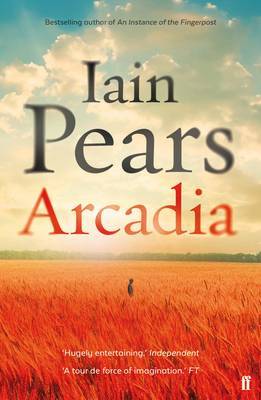
ArcadiaI do like to take a big chunky book on hols with me - something I'd struggle to dedicate time to during the average working week's juggle of family and work life. There's a few contenders this year including Marlon James' 2015 Booker winner 'A Brief History of Seven Killings', Ryan Gattis' novel of the LA riots 'All Involved' and Iain Pears' genre-bending speculative fiction novel 'Arcadia'. I've also yet to find the time to pick up Jessie Burton's 'The Muse' or Sarah Perry's 'The Essex Serpent' so I imagine they might find their way into my packing at some point. And I do like to leave room for some non-fiction, with Virginia Nicolson's 'Perfect Wives in Ideal Homes: The Story of Women in the 1950s' at the top of my list.

All in all, I'm certainly not short of books to choose from but, in my mind, a summer read is one that I've been waiting to find the time to savour as much as it's something pacy or specifically set in the season. That said, the current sunny spell has seen me pull Joanna Cannon's 'The Trouble with Goats and Sheep' off my shelf as it's is set in the record-breaking heatwave of 1976. 

I'd love to hear about your summer reading plans and goals.Do you organise your holiday reading in advance or are you an airport book buyer who takes a chance on whatever paperbacks catch your eye? Do you even have 'summer reads'? As always, let me know in the comments below or say hi over on Twitter @amyinstaffs or on Litsy @ShelfofUnreadBooks. And, whether you're partaking in any summer reading or not, until the next time...

Happy Reading! x
Monday, 18 July 2016

REVIEW: Smoke by Dan Vyleta

SmokeMaybe I set the bar too high for this one but, having heard it described as a cross between ‘Harry Potter’ and ‘His Dark Materials’, it was hard not to be excited when I was approved to read ‘Smoke’. And, having read it, I can definitely see how the comparisons have been drawn with these classics. Sadly, however, I don’t feel the finished product meets the standard of either series.

Opening in a private boarding school on the outskirts of Oxford, ‘Smoke’ is set in an alternative England in which sin appears as smoke that emits from the body and stains clothes with its soot. School friends Thomas and Charlie are amongst the privileged few – born into the ruling elite, they are being taught to control and suppress their smoke, a sign that will eventually distinguish them from the uneducated masses. It’s a fascinating premise and the opening chapters are full of a dark, foreboding atmosphere with the dense, descriptive writing creating a real sense of the Victorian gothic on every page.

Thomas and Charlie are likeable enough narrators – although Charlie is so pure of heart for a teenage boy that it’s almost unreal – but I felt that there wasn’t enough distinction between their voices. That was, in fact, one of the major problems with the novel for me. As the story opens up, the POV hops between multiple narrators as well as between the third and first person but, despite this, I never got a real sense of each voice as an individual. I feel that the author was, in some ways, trying to emulate the style of Charles Dickens - there is certainly something very similar in the tone – and maybe Dickens fans will find this method of characterisation enjoyable but, alas, I am not a fan of Dickens and I just found it rather leaden.

As the story continues, Thomas and Charlie are drawn into a conspiracy that undermines the very nature of the smoke and its role in society. Forced to run for their lives; their every step hunted by dark forces, the boys – along with a teenage girl, Livia, who is also of noble birth – begin to question the nature of the smoke, their relationship with their own sins and transgressions and the very concepts of purity and sin themselves. All of which sounds – and should be – absolutely fascinating. Unfortunately, all of this happens so slowly that I found the latter part of the book to be terminally dull and terribly convoluted.

Following on from the tense opening at the school and the growing tension that takes the boys to a mysterious country manor, there is a well-executed dramatic incident about midway through the book that forces the trio on the run. Following this however the book slows down instead of speeding towards the finale, with an awful lot of hand-wringing and self-reflection and long paragraphs about the nature of sin and personal identity. Couple this with the dense, descriptive writing style and I just felt that the story was getting bogged down, the characters struggling to wade through the mass of world-building and the intricacies of the theology that the author wanted us to understand. Add in the fact that a lot of incidental characters are introduced who seem to drop into and out of the story on a whim, and the final third of the book becomes a real tangle of plot, sub-plots and motivations. By the time the finale did arrive, I just wasn’t invested enough in any the characters to really care what happened to them and I was struggling to retain a grasp on what the most important aspect of the plot was meant to be.


I’m sure a lot of people will disagree with me about ‘Smoke’ - it’s a high-concept, densely descriptive and imaginative dystopian with a heavy dose of the Victorian Gothic on the side. As such, I’m sure it will appeal to a lot of readers. And the first half, in the school and the gothic country mansion, was exciting and inventive, with plenty to recommend it. Unfortunately, the second half of the book just gets bogged down in plot and the characters fail to develop in any way that felt meaningful to me. Overall therefore, whether it was a case of too high a set of expectations on my part, or whether it was all just too Dickensian for my tastes, this wasn’t a book that I particularly enjoyed and I probably wouldn’t have pushed through to the finale if it wasn’t for the fact that I was reading for review. 

'Smoke' by Dan Vyleta, is published by W&N and is available as a hardback, e-book and audio download from all good bookshops and online retailers. My thanks go to the publisher and to NetGalley for the chance to read an advanced copy of the book in return for an honest and unbiased review.